Can a Family Legally Live in an RV
Can a Family Legally Live in an RV: What the Law Actually Says
This is the question most families research quietly, worried the answer might kill a lifestyle they have already started dreaming about. The good news is that yes — families can and do legally live in an RV full time, all across the United States. The longer answer is that it depends heavily on where you park, how you establish residency, and whether you understand the difference between zoning rules, state laws, and campground policies.
Getting this wrong does not just create legal headaches — it can put your family in a position where you are forced to move without notice or face fines that complicate your finances. Getting it right, on the other hand, opens up a genuinely freeing and legal lifestyle that tens of thousands of American families are living today.
Here is what you actually need to know.
Why RV Legality Is Not a Simple Yes or No
The confusion around whether families can legally live in an RV comes from one core fact: the federal government does not classify RVs as permanent dwellings. The U.S. Department of Housing and Urban Development defines RVs as vehicles intended for recreational, travel, or temporary camping purposes — not as primary residences.
That federal classification creates a ripple effect across state and local law. Because an RV is legally a vehicle rather than a home, it falls under a patchwork of zoning ordinances, county regulations, and state vehicle codes rather than a single unified housing law. What is perfectly legal in a rural county in Tennessee may be entirely prohibited in a suburban neighborhood in the same state.
This is why families who approach RV living with a clear legal strategy — rather than assuming the lifestyle is either universally legal or universally illegal — are the ones who make it work long-term.
Where It Is Legal to Live in an RV Full Time
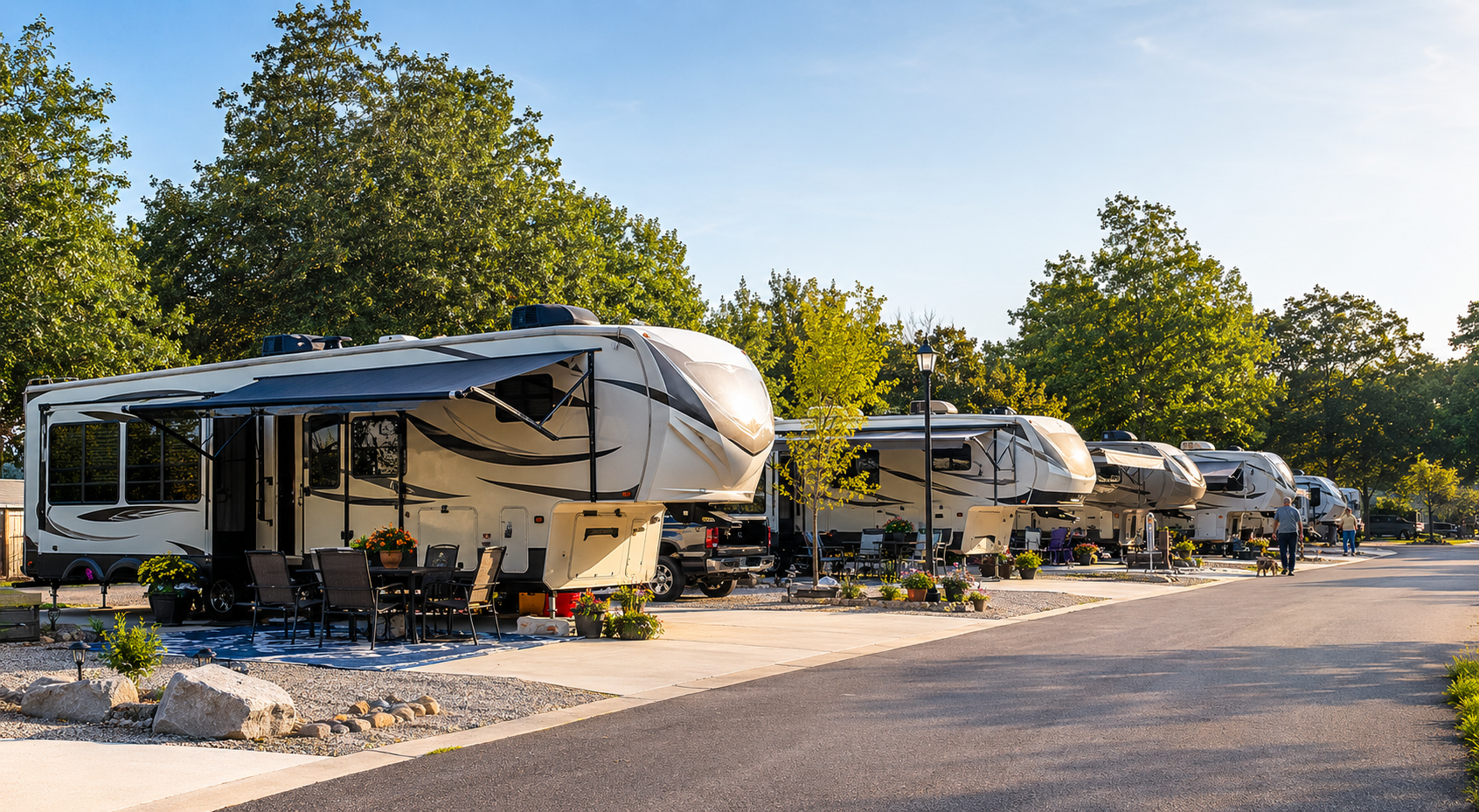
The most straightforward and legally solid way for a family to live in an RV is to establish residency at a licensed RV park or campground that permits long-term stays. This is how the majority of full-time RV families structure their lives, and it works because RV parks are specifically zoned and permitted for human habitation — they exist precisely for this purpose.
Long-term RV park residency gives your family a legal mailing address, utility hookups through the park's licensed infrastructure, and a defined lease arrangement that protects both the resident and the park operator. Monthly rates at full-hookup RV parks vary widely by location — more on cost management later — but the legal standing this arrangement provides is clear and unambiguous.
The second legal pathway is continuous travel. Families who move between licensed campgrounds, state parks, national park campgrounds, and private RV parks without establishing a single permanent location occupy a well-recognized legal space. Because they are using RV facilities as intended — temporarily and for travel purposes — they face no legal challenge to their lifestyle. Thousands of full-time traveling families operate exactly this way, spending weeks at a time in each location before moving on.
Where Families Run Into Legal Problems
The most common mistake families make is parking their RV on private residential property — either their own land, a family member's yard, or a friend's driveway — and attempting to live there full time.
In most urban and suburban jurisdictions, this arrangement runs directly into local zoning ordinances that prohibit using a recreational vehicle for residential purposes on land zoned for standard housing. Some cities are explicit about this — Indianapolis, for example, has a zoning ordinance that restricts RV use for living purposes to no more than 15 days per calendar year. Other municipalities enforce similar restrictions through building codes, HOA rules, or vehicle ordinances.
Rural areas tend to be more permissive, and in genuinely rural counties with low population density and minimal zoning enforcement, families do sometimes live in RVs on private land without issue. But "sometimes goes unenforced" is not the same as legal, and relying on that distinction puts your family in a fragile position if neighbors complain, a property changes hands, or local enforcement priorities shift.
Even in areas where parking an RV on your property is permitted, actively living in it — connecting it to utilities, using it as a primary sleeping and cooking space — typically crosses a separate legal threshold. The safer and more sustainable path for families committed to the lifestyle is a licensed RV park or continuous travel arrangement rather than a private property setup.
Establishing Legal Domicile as a Full-Time RV Family
One of the most practically important legal questions for full-time RV families is not where they park — it is where they are legally a resident. Every U.S. resident is required to maintain a legal domicile: a home state for purposes of voting, vehicle registration, driver's licensing, taxes, and mail.
For full-time traveling families, this means deliberately choosing a domicile state rather than simply defaulting to wherever you used to live. Three states dominate this conversation for a specific set of reasons:
South Dakota has no state income tax, straightforward residency requirements, and a well-established process for full-time RVers to establish legal domicile. A physical visit to the state, a stay at a registered campground, and a trip to the DMV is often all it takes.
Texas also has no state income tax, accepts mail forwarding services as a valid domicile address, and has a large and active community of full-time RV families who have established residency there.
Florida offers similar advantages — no income tax, a warm base state for families who want a winter anchor point, and a relatively straightforward domicile process for RV residents.
Families in the Southeast who use A&L RV Sales and travel primarily through Tennessee, Georgia, Virginia, and North Carolina often work with a South Dakota or Florida domicile while maintaining their primary travel region in the Southeast.
Children, Schools, and Legal Obligations for Full-Time RV Families
Parents of school-aged children have an additional layer of legal responsibility to understand. Every state has compulsory education laws, and those laws apply to children living in RVs just as they apply to children living in houses.
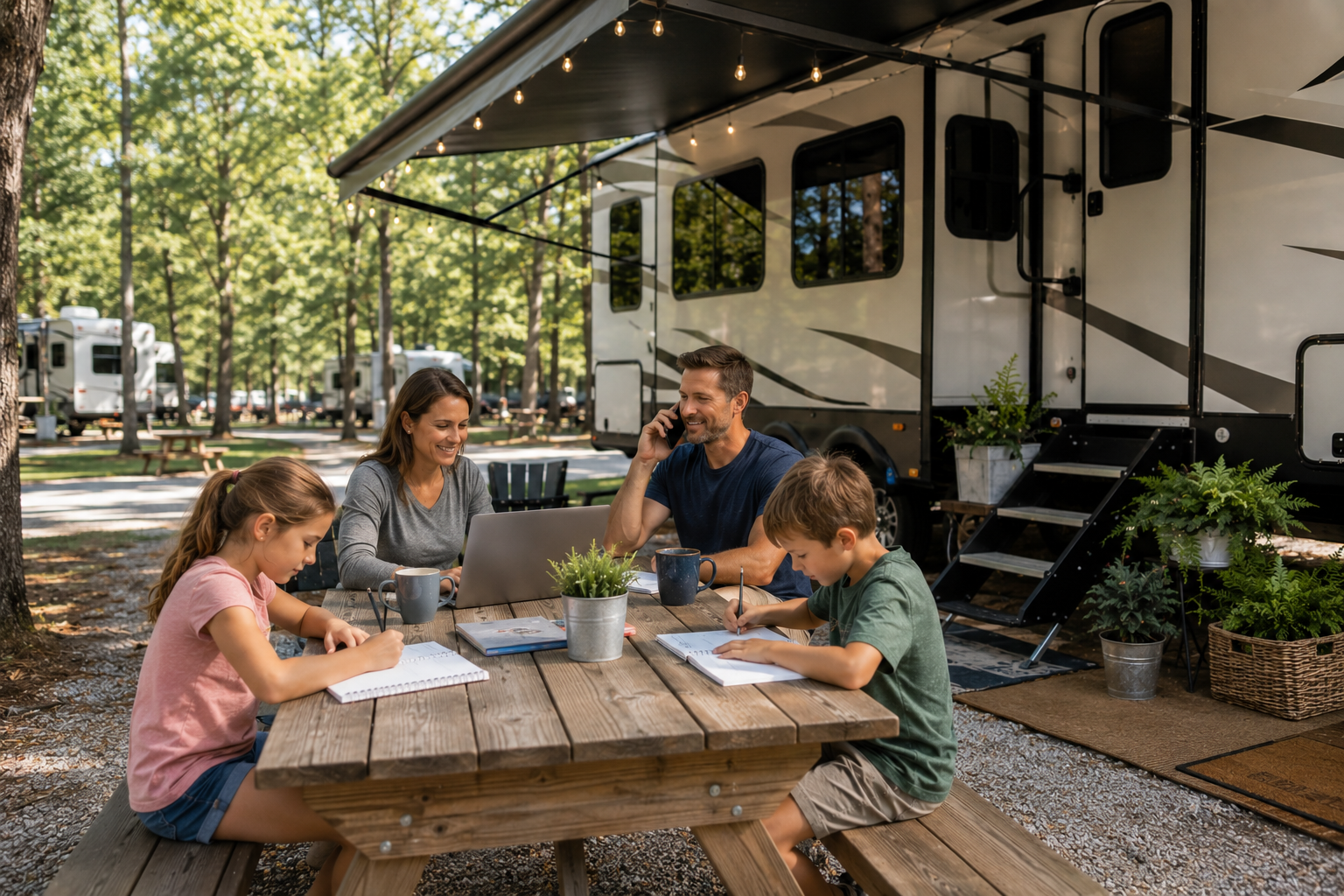
The good news is that homeschooling is legal in all 50 states, and most full-time RV families satisfy their compulsory education obligations through a structured homeschool program or enrollment in an accredited online school. The legal requirements for homeschooling vary by state — some states require annual notification to the local school district, others require standardized testing, and a handful require almost no formal reporting at all.
Your legal domicile state is typically the state whose homeschool laws apply to your family. This is one reason some families choose their domicile state partly based on its homeschool regulations — South Dakota and Texas, for instance, both have relatively minimal reporting requirements compared to states like New York or California.
Families using a virtual public school rather than a private homeschool curriculum need to enroll through their domicile state's program and ensure their travel schedule accommodates the participation requirements that specific program imposes.
Health Insurance and Mail — Two Details That Catch Families Off Guard
Two practical legal and logistical issues that families often discover mid-transition rather than before they leave are health insurance and mail.
Health insurance plans tied to employer coverage or marketplace plans are often built around a specific state's provider network. A family that moves full-time across multiple states may find their existing plan covers almost nothing outside their home state network. Before departing, families should research plans that offer nationwide or multi-state coverage — certain short-term, faith-based, or specific ACA marketplace plans accommodate this better than others.
Mail is solved through a mail forwarding service. Companies like Escapees, America's Mailbox, and Dakota Post specialize in serving full-time RV residents, providing a physical street address in your domicile state, scanning incoming mail, and forwarding physical items on request. This address serves as your legal residence address for DMV registrations, voter registration, banking, and any other purpose requiring a fixed physical location.
Setting up both of these systems before you hit the road full time — rather than patching them together after — removes two of the most common sources of stress in the first year of full-time family RV living.
The Right RV Makes Legal Full-Time Living More Manageable
Families who intend to live full time in an RV need a rig built for that purpose. Weekend camping rigs and entry-level travel trailers are not constructed for daily, year-round use. Walls, roofing systems, slide-out mechanisms, and appliances designed for occasional use deteriorate quickly under the stress of full-time living — and a rig that requires constant repairs is one that keeps you in one place longer than your campground permit allows.
Fifth wheels built to full-time standards — with laminated wall construction, enclosed and insulated underbellies, residential-grade appliances, and robust slideout systems — hold up to the demands of family life in a way that entry-level rigs simply do not. Brands like Alliance RV, Forest River's Cardinal and Riverstone lines, and Thor's Montana fifth wheel line are designed with full-time durability in mind, not just showroom appeal.
At A&L RV Sales, the team works with families across Tennessee, Georgia, Virginia, and North Carolina who are making exactly this transition — from curious to committed. Understanding which rig matches your travel style, family size, and legal living plan is a conversation worth having with people who have walked hundreds of families through it.
Browse the current inventory of full-time-ready fifth wheels and travel trailers across A&L RV Sales' eight locations, or connect with the team directly to talk through what legal full-time family RV living actually requires before you make the investment.