

Can You Live Full Time in a Fifth Wheel? Here's What You Need to Know
Yes — you absolutely can live full time in a fifth wheel. Thousands of families, couples, and solo adventurers across the country do it every day. But full-time fifth wheel living is not a permanent vacation. It's a lifestyle that rewards those who go in with realistic expectations, smart planning, and the right rig.
If you're seriously considering making the move, here's everything you need to know before you unhook from the grid.
Why People Choose a Fifth Wheel for Full-Time Living
Out of all the RV types available — Class A motorhomes, travel trailers, Class C rigs — the fifth wheel has emerged as the go-to choice for serious full-timers. The reasons aren't hard to understand.
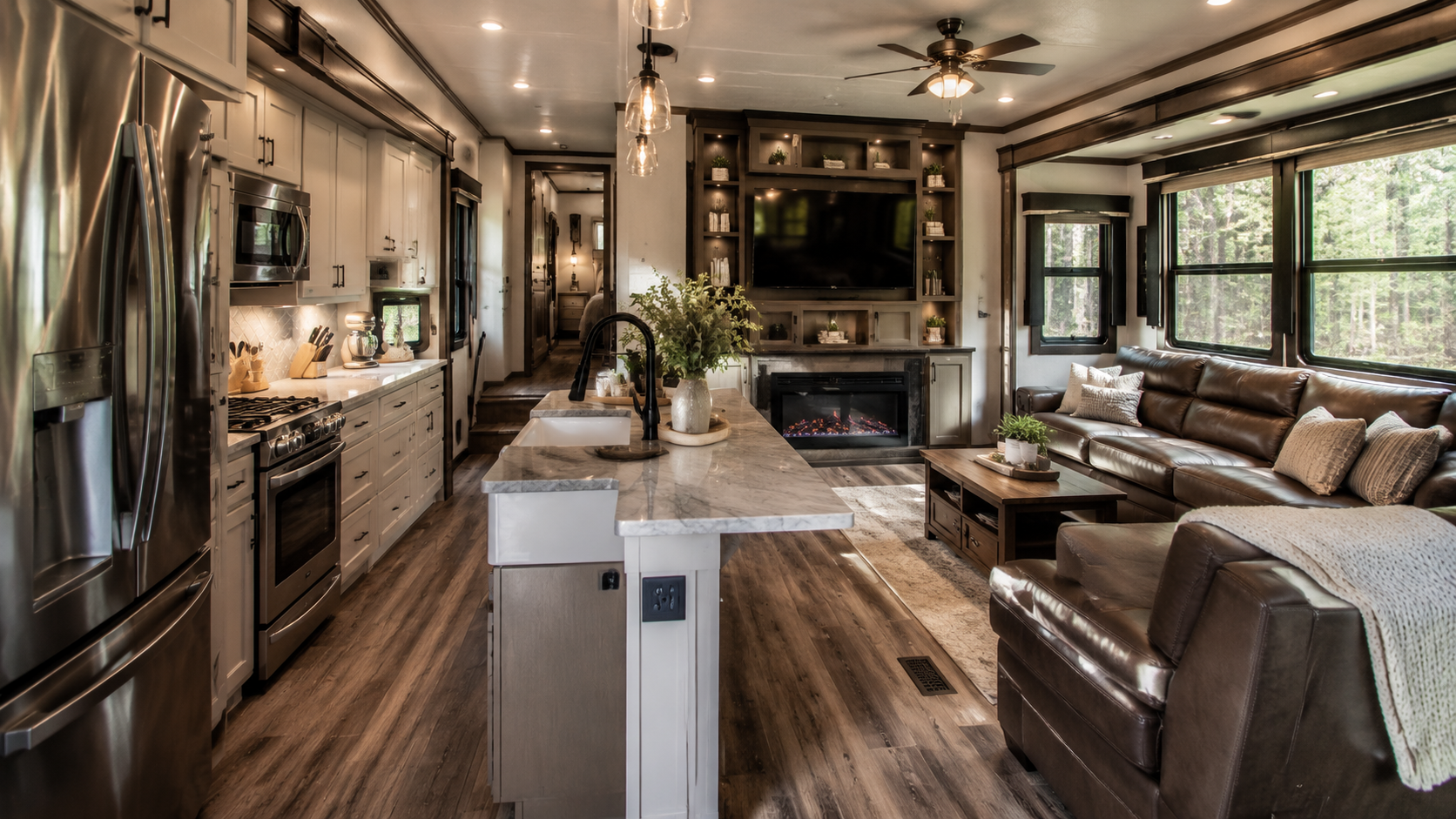
More living space per dollar. Fifth wheels offer more usable square footage than almost any other towable RV. The bi-level layout — with a raised front bedroom above the hitch and a full living area below — creates genuine room separation that makes long-term living comfortable rather than claustrophobic.
Residential features that actually work. Full-time fifth wheels routinely include residential-size refrigerators, deep kitchen sinks, pantry storage, full-length wardrobes, and king-size beds. These aren't afterthoughts — they're designed for people who actually live in the space, not just sleep in it on weekends.
Superior towing stability. Because the hitch sits in the truck bed over the rear axle, fifth wheels tow more steadily than travel trailers — a meaningful advantage when you're driving hundreds of miles every few days.
Less mechanical complexity than a motorhome. Without an engine, transmission, or chassis to maintain, a fifth wheel gives you far fewer mechanical systems to worry about compared to a Class A or Class C. When something breaks, it's usually simpler and cheaper to fix.
The Real Costs of Full-Time Fifth Wheel Living
One of the biggest surprises for new full-timers is how wide the cost range can be. Annual living costs for full-time fifth wheel living typically range from $10,000 to $36,000 per year — a spread that reflects just how different people approach the lifestyle.
Your actual costs will be shaped by:
Campsite and parking fees. This is usually the largest variable expense. Nightly campground rates at full-hookup RV parks range from $25 to $80+ per night depending on location and amenities. Monthly rates at RV communities can run $400–$1,200. Many full-timers blend paid campgrounds with free camping on public land to reduce this cost dramatically.
Fuel. Towing a fifth wheel with a heavy-duty pickup truck means real fuel costs every time you move. Plan for 8–12 miles per gallon while towing, depending on terrain and trailer weight. Full-timers who move frequently feel this in their budget more than those who stay parked for weeks at a time.
Maintenance and repairs. Budget realistically for this. A general rule is to set aside 1–2% of your RV's value annually for maintenance and repairs. Seals, roof maintenance, slide-out mechanisms, appliances, and tires all have finite lifespans that full-time use accelerates.
Healthcare. This is one of the most important planning considerations for full-timers, especially those under 65. You'll need health insurance that works across state lines — a point-of-service or national network plan is essential.
Internet and connectivity. If you work remotely — as many full-timers do — reliable internet is non-negotiable. Most full-timers run multiple redundant solutions: a cellular hotspot, a satellite internet plan, and campground WiFi as backup.
What to Look for in a Full-Time Fifth Wheel
Not every fifth wheel is built for full-time living. Weekend rigs often cut corners that become painfully obvious when you're living in the unit 365 days a year. Here's what separates a full-time fifth wheel from a vacation trailer.
Floor Plan and Layout
Prioritize floor plans that give you clearly defined living zones. A private bedroom with a door — not just a curtain — is essential for couples and families. Dedicated workspace if you're working remotely. Dining area separate from the living room. The more the floor plan mirrors how a small apartment is laid out, the more livable it becomes over months and years.
Most full-time veterans recommend a fifth wheel between 32 and 36 feet long. Shorter units can feel restrictive on long-term stays. Units longer than 36 feet create challenges in some campgrounds, state parks, and when navigating mountain roads or tight campsite loops.
Construction Quality
Full-time living puts significantly more wear on an RV than seasonal use. Look for:
Aluminum frame construction (more resistant to moisture and rot than wood framing)
Fiberglass or aluminum exterior panels over laminated wood composites
Residential-grade flooring and cabinetry built for daily traffic
Solid-surface countertops rather than lightweight plastic laminates
Insulation rating of at least R-11 in the walls and R-22 in the roof for year-round comfort in varying climates
Storage
This is often underestimated by first-time buyers. You're replacing a house with a trailer — storage discipline is real. Large basement compartments, overhead cabinetry, and under-bed storage are critical. Walk-in closets in the master bedroom are a major quality-of-life upgrade for full-timers.
Slide-Outs
Most full-time fifth wheels include two to four slide-outs that dramatically expand the living area when parked. More slides mean more space — but they also mean more mechanisms to maintain. Make sure you understand the slide maintenance requirements and factor that into your planning.
Practical Realities Nobody Tells You About
Full-time RV communities are enthusiastic for good reason — but honest veterans will tell you about the parts the glossy YouTube videos leave out.
Mail and domicile. You'll need a legal state of residence. Many full-timers use a mail forwarding service in states like South Dakota, Texas, or Florida that are friendly to RV residents. Your domicile state affects your driver's license, vehicle registration, and state income tax.
Parking rules and legality. Not every place allows full-time RV residency. Many RV parks have length-of-stay limits. Some municipalities restrict full-time RV living. Research campground rules carefully — especially if you plan to stay in one area long-term.
Weather management. A fifth wheel is not insulated or climate-controlled like a house. Extreme cold requires heat tape on water lines, skirting around the trailer base, and careful management of propane supplies. Extreme heat puts your air conditioning systems under real pressure. Full-timers in climates with harsh winters often migrate south during cold months.
Social and community life. Many full-timers report that the RV community is one of the most welcoming, helpful groups of people they've ever encountered. Neighbors share tools, skills, and campfire conversations freely. That community becomes a genuine support system when things go sideways — and at some point, something will go sideways.
Best Fifth Wheel Brands for Full-Time Living
If you're buying a fifth wheel specifically for full-time living, prioritize build quality and long-term durability over entry price. The brands most consistently recommended by full-timers include:
Grand Design Reflection and Solitude — widely regarded as the benchmark for full-time livability and construction quality at their respective price points
Alliance RV Avenue and Paradigm — premium build standards with full-time features built in from the ground up
Forest River Cedar Creek and Cardinal — well-built, feature-rich fifth wheels with strong dealer support networks
Keystone Montana — one of the longest-running full-time fifth wheel platforms, known for spacious floor plans and proven reliability
At A&L RV Sales, we carry full-time-ready fifth wheels from several of these top brands across our eight locations — and our team can walk you through which models are genuinely built for long-term living versus those designed primarily for weekend use.
Is Full-Time Fifth Wheel Living Right for You?
It's worth being honest with yourself before making this leap. Full-time fifth wheel living is an incredible fit for people who:
Value experiences and freedom over square footage and possessions
Are comfortable with a maintenance mindset — things break, and you fix them
Have a flexible or remote income source
Thrive in community settings and enjoy meeting new people
Are willing to plan carefully around healthcare, mail, and domicile
It's a harder fit for people who need consistency of space, have children in school with fixed schedules, or struggle with the uncertainty that comes with life on the move.
The lifestyle isn't for everyone — but for those it fits, it's genuinely transformative.
Ready to Explore Your Full-Time Options?
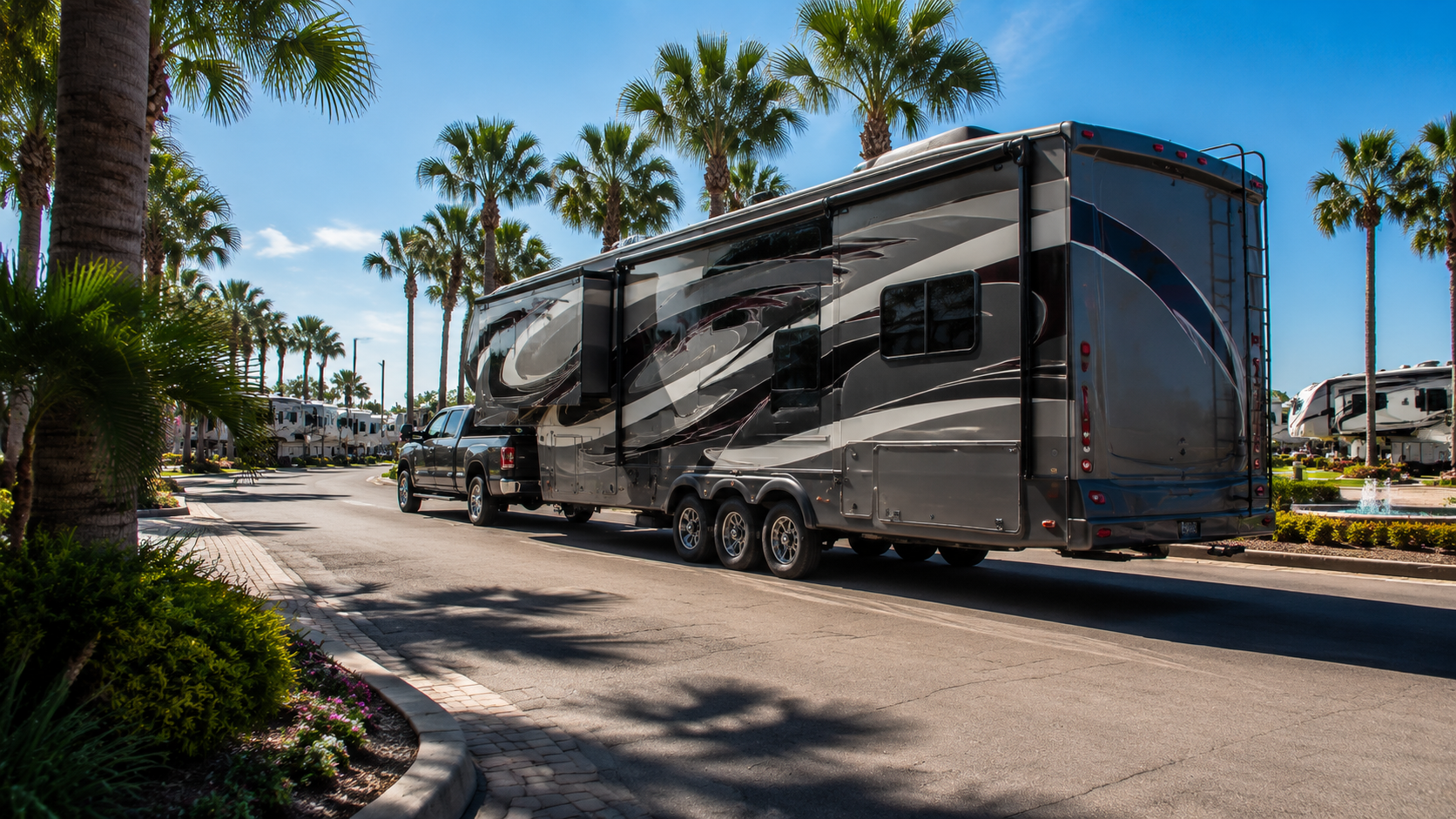
If full-time living is on your horizon, the right fifth wheel makes all the difference. At A&L RV Sales, our team has helped hundreds of families and couples find the rig that fits their lifestyle — not just their wish list. Browse our fifth wheel inventory across our eight Southeast locations, or stop by and let us walk you through models specifically suited for full-time living.