
Do You Need a Weight Distribution Hitch for a Travel Trailer?
Most travel trailers need a weight distribution hitch, especially any trailer over roughly 5,000 pounds or with a tongue weight above 10 to 15 percent of the trailer's total weight. A weight distribution hitch levels out the tow vehicle and trailer, spreads the tongue weight across both axles, and improves steering, braking, and stability. Lighter trailers under about 3,500 pounds with low tongue weight can sometimes tow safely on a standard weight-carrying hitch, but checking your specific numbers matters more than guessing.
Here's how to know for sure what a weight distribution hitch actually does and how to avoid the setup mistakes that cause sway and premature wear on your tow vehicle.
What Is a Weight Distribution Hitch and How Does It Work?
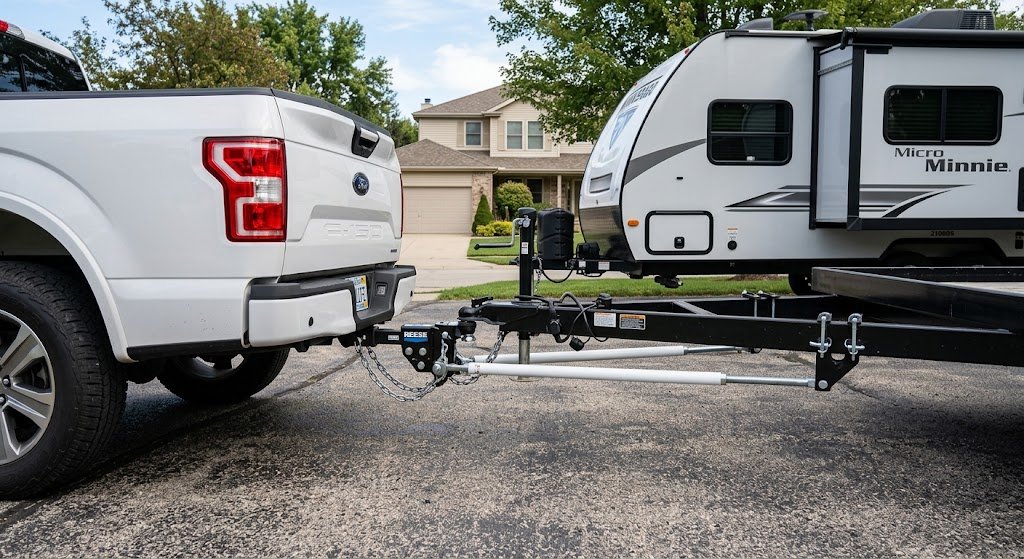
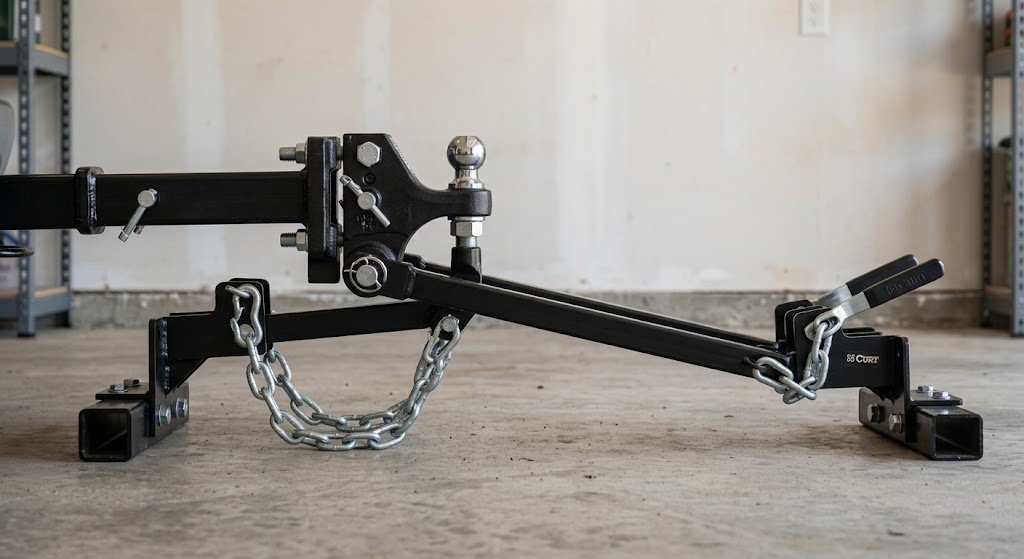
A weight distribution hitch is a towing system that uses spring bars and chains to transfer tongue weight from the rear axle of the tow vehicle back onto the trailer's axles and the tow vehicle's front axle.
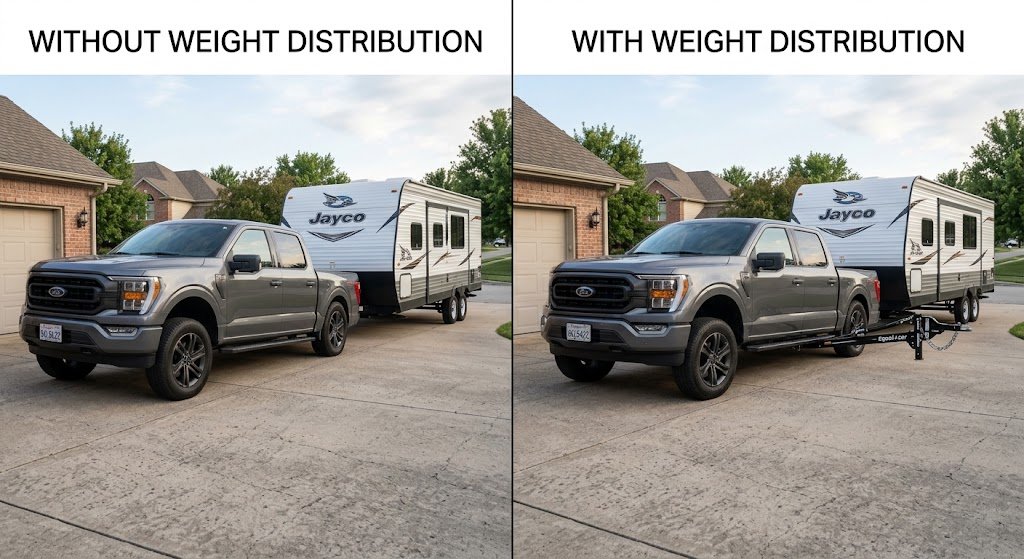
Without one, all of that downward tongue weight sits on the rear of the truck or SUV. That causes the back end to squat, the front end to lift, and the whole rig to feel unstable. Headlights point too high, steering gets vague, and braking distance increases because the front tires lose traction.
The spring bars in a weight distribution hitch act like levers. As they're tensioned against the trailer frame, they pull the rear of the tow vehicle back down and push weight forward and onto the trailer's own axles. The result is a rig that sits level from front to back, tracks straighter, and handles closer to how the tow vehicle drives unloaded.
Many weight distribution hitches also include integrated sway control, which uses friction or a cam mechanism to resist the side-to-side motion caused by wind gusts or passing trucks.
How Do You Know If Your Travel Trailer Needs One?
The clearest way to know is to compare your trailer's actual tongue weight to your tow vehicle's specifications, then check what the trailer manufacturer recommends.
Start with these numbers:
Tongue weight percentage. Most travel trailers run a tongue weight between 10 and 15 percent of the loaded trailer weight. A 7,000-pound trailer with a 900-pound tongue weight is a strong candidate for weight distribution.
Rear axle capacity. If tongue weight alone pushes your tow vehicle's rear axle close to its rated capacity, a weight-carrying hitch won't spread that load out, and you're at risk of overloading the rear tires and suspension.
Manufacturer recommendations. Check the travel trailer's owner's manual and the tow vehicle's manual. Many truck and RV manufacturers specifically state a weight distribution hitch is required above a certain trailer or tongue weight, and skipping it can affect warranty coverage in some cases.
The squat test. Hook up without weight distribution and look at the tow vehicle's ride height. If the rear drops noticeably and the front rises, that's a visual sign the tongue weight is overloading the back axle.
A quick rule of thumb used across the RV industry: if your travel trailer weighs more than about 5,000 pounds, plan on weight distribution. Under that, judge it by the tongue weight percentage and how your specific tow vehicle handles the load.
What Are the Benefits of Using a Weight Distribution Hitch?
Even when a weight distribution hitch isn't strictly required, most experienced travel trailer owners use one because the difference in towing feel is significant.
Level ride height. Keeps the front and rear of the tow vehicle sitting close to its normal, unloaded height.
Better steering and braking. With weight properly distributed to the front axle, the front tires keep their grip, which restores normal steering response and shortens braking distance.
Reduced trailer sway. Many weight distribution hitches include sway control, which helps counteract the push-pull motion from crosswinds or passing semis.
Less strain on the tow vehicle. Spreading the load protects rear leaf springs, shocks, and tires from carrying more weight than they're built for over thousands of miles.
Correct headlight aim. A squatted rear end tips headlights upward, which can blind oncoming drivers at night. Leveling the rig fixes this automatically.
Warranty and insurance considerations. Some tow vehicle and trailer manufacturers list weight distribution as a requirement above certain weights, which can matter if a towing-related claim ever comes up.
Weight-Carrying vs. Weight-Distributing Hitches: What's the Difference?
A weight-carrying hitch is the simplest setup. The ball mount holds all the tongue weight in one spot at the rear of the tow vehicle, with nothing to spread that load elsewhere. It works fine for small, light trailers like teardrops or compact pop-ups where tongue weight stays low relative to the tow vehicle's capacity.
A weight-distributing hitch adds spring bars that connect the hitch head to the trailer frame. As those bars are tensioned, they redistribute tongue weight across the tow vehicle's front axle and the trailer's own axles instead of concentrating it at one point.
The practical difference comes down to how the loaded rig sits and handles:
Weight-carrying: simpler to hook up, lower cost, best suited to small trailers with tongue weight under a few hundred pounds.
Weight-distributing: more setup involved, but delivers a level ride, better control, and is often required once trailer weight or tongue weight climbs into mid-size and larger travel trailer territory.
Most travel trailers in the 20 to 35 foot range fall into weight-distributing territory. Smaller trailers under about 20 feet sometimes don't, but it's worth checking the actual numbers rather than assuming based on length alone.
It's also worth noting that fifth wheels don't use weight distribution hitches at all. Their hitch mounts in the truck bed over the rear axle, which handles weight transfer differently. If you're cross-shopping travel trailer vs fifth wheel options, that's one more factor in the decision.
What Should You Consider Before Buying a Weight Distribution Hitch?
Picking the right hitch is about matching capacity and features to your specific trailer, not just grabbing whatever is in stock.
Checklist for choosing a weight distribution hitch:
Match the tongue weight rating. Choose a hitch rated for your trailer's actual loaded tongue weight, with some room to spare, not the bare minimum.
Check gross trailer weight rating too. Hitches are rated for both tongue weight and total trailer weight, and both need to clear your numbers.
Decide between round bar and trunnion bar styles. Trunnion bar hitches tend to handle higher weights and are common on larger travel trailers. Round bar hitches are typically lighter duty and easier to hook up solo.
Look for integrated sway control. Friction sway control is the simplest and least expensive. Cam-style or hitch-integrated sway control tends to perform better in gusty conditions.
Confirm ball mount and receiver compatibility. Shank length, rise or drop, and receiver class all need to match your tow vehicle.
Get it set up correctly. A weight distribution hitch that isn't tensioned properly won't distribute weight the way it's supposed to. Bar tension, chain length, and ball mount height all affect how level the rig sits.
Getting the setup dialed in is one of the reasons many travel trailer owners have their dealership's service department handle the initial install and adjustment rather than guessing at it in a driveway.
What Common Mistakes Do Travel Trailer Owners Make with Weight Distribution Hitches?
A few recurring mistakes cause most of the towing problems owners run into.
Underestimating tongue weight. Owners often go off the sticker weight instead of weighing the trailer loaded with water, propane, gear, and supplies, which can push tongue weight well past the dry number.
Buying a hitch that's barely rated for the load. A hitch rated right at the trailer's tongue weight leaves no margin for extra gear or a fully loaded trip.
Skipping professional setup. Bar tension and chain adjustment take some trial and error. A hitch installed but not tensioned correctly won't level the rig, even though it looks installed correctly.
Not re-checking after changes. Adding a generator, extra water in the tank, or a cargo carrier changes tongue weight. A hitch tensioned for one load setup may need readjustment for another.
Assuming a small trailer never needs one. Some lightweight trailers still carry surprisingly high tongue weight percentages depending on how they're loaded and where the axles sit. It's worth checking the numbers rather than assuming based on trailer size.
Confusing sway control with weight distribution. A sway bar alone doesn't redistribute tongue weight. Some setups need both a weight distribution system and dedicated sway control working together, especially for longer trailers or frequent highway towing.
How A&L RV Sales Can Help You Get the Right Setup
Matching a travel trailer to the right tow vehicle and hitch setup is easier when you're working from real numbers instead of guesswork. Our team can walk through a trailer's dry weight, tongue weight, and cargo carrying capacity against your specific tow vehicle before you buy, so you know exactly what kind of hitch setup you'll need.
If you already own a travel trailer and aren't sure whether your current hitch is doing its job, our service department can inspect the setup, check tension and ride height, and recommend the right weight distribution system for your trailer.
Browse our current travel trailer inventory to compare weights and specs, check our tow guides to see what your vehicle can safely handle, or reach out to talk through financing and trade-in options if you're looking to move into a trailer that better matches your tow vehicle.
Frequently Asked Questions
Do all travel trailers need a weight distribution hitch?
Not all of them. Very light trailers, generally under about 3,500 pounds with low tongue weight, can sometimes tow safely on a weight-carrying hitch. Most mid-size and larger travel trailers, especially anything over 5,000 pounds, need weight distribution for safe, stable towing.
What size weight distribution hitch do I need?
Size it to your trailer's actual loaded tongue weight and gross trailer weight, not the empty or dry weight listed on the spec sheet. Choose a hitch rated above your real numbers so there's margin for gear, water, and supplies you'll be carrying.
Can I tow a travel trailer without a weight distribution hitch?
You can if the trailer is light enough and tongue weight stays well within your tow vehicle's rear axle capacity. For most mid-size to large travel trailers, towing without weight distribution causes rear squat, poor steering, and increased sway risk.
How much does a weight distribution hitch cost?
Cost varies based on weight rating and whether sway control is built in, with basic setups on the lower end and higher-capacity systems with integrated sway control costing more. Our service and parts team can recommend options that fit your trailer's weight and your budget.
Do fifth wheels need a weight distribution hitch?
No. Fifth wheels use a hitch mounted in the truck bed over the rear axle, which distributes weight differently than a bumper-pull travel trailer setup. That's one reason some buyers comparing travel trailer vs fifth wheel options lean toward a fifth wheel for heavier loads.
What is tongue weight and why does it matter?
Tongue weight is the downward force the trailer's hitch puts on the tow vehicle's rear. It typically runs 10 to 15 percent of the trailer's total weight. Too much tongue weight without distribution overloads the rear axle and causes handling and braking problems.
Can a weight distribution hitch fix trailer sway?
A weight distribution hitch improves overall stability by leveling the rig, and many models include integrated sway control. But severe sway issues can also come from improper loading or a mismatched tow vehicle, so the hitch is one part of the fix, not always the whole solution.
Should a dealer install my weight distribution hitch?
It's a good idea, especially for a first setup. Proper bar tension and ride height adjustment take some know-how, and a dealership service department can dial in the setup correctly and check it against your specific trailer and tow vehicle.
Final Takeaway
A weight distribution hitch isn't an optional upgrade for most travel trailers. Once tongue weight and trailer weight climb past a certain point, it becomes the difference between a rig that tows level and predictably and one that squats, sways, and wears out its tow vehicle early. Check your trailer's actual loaded tongue weight against your tow vehicle's capacity, and when in doubt, get a second opinion before hitting the highway.
If you're shopping for a travel trailer or want your current towing setup checked, our team at A&L RV Sales can help you match the right trailer, tow vehicle, and hitch system together. Browse our inventory, explore financing options, or contact us to talk through your specific towing situation.