Fifth Wheel Hitch vs. Gooseneck Hitch: What's the Difference?
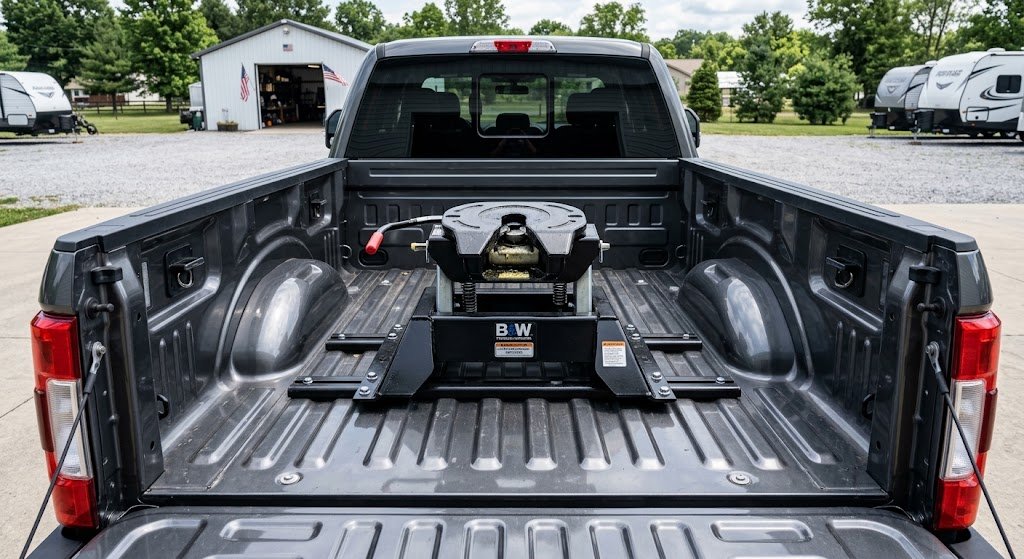
A fifth wheel hitch uses a horseshoe-shaped coupling mounted on a raised platform in the truck bed that locks onto a kingpin on the trailer, creating a pivoting connection similar to a semi-truck. A gooseneck hitch uses a low-profile ball mounted near the bed floor that connects to a coupler on a downward-curving trailer neck. Fifth-wheel hitches are built for RVs, while gooseneck hitches are more common on flatbed, livestock, and equipment trailers.
Here's how each one works, where the real differences show up, and how to figure out which setup fits your towing situation.
What Is a Fifth Wheel Hitch and How Does It Work?
A fifth wheel hitch sits on a raised platform bolted into the truck bed, positioned over or just in front of the rear axle. The hitch head has a horseshoe-shaped jaw that clamps around a kingpin mounted on the trailer's front cap.
This design lets the trailer pivot on the kingpin the same way a semi-trailer pivots on a tractor's fifth wheel plate. That pivot point sits higher and further forward than a standard bumper-pull hitch, which spreads weight more evenly across the truck's frame and axles.
Because the connection point sits above the bed rails, fifth wheel hitches handle heavy pin weight well and are the standard hitch type for fifth wheel travel trailers, from mid-size family units up to large toy haulers.
What Is a Gooseneck Hitch and How Does It Work?
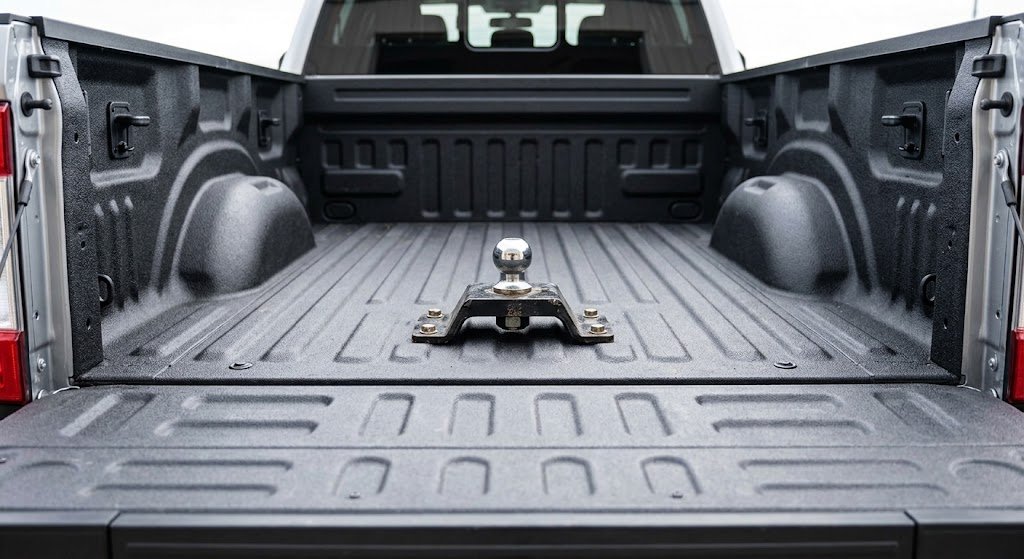
A gooseneck hitch uses a ball, typically 2 5/16 inches, mounted low in the truck bed near the floor, usually positioned directly over the rear axle. The trailer has a matching coupler on the end of a gooseneck neck that curves down and forward to reach that low mounting point.
This setup keeps the connection point close to the bed floor rather than raised on a platform. It's a simpler mechanical connection than a fifth wheel hitch, closer in concept to a standard ball hitch but positioned in the bed instead of at the rear bumper.
Gooseneck hitches are the standard choice for livestock trailers, flatbed trailers, and equipment haulers because those trailers are built with a gooseneck neck rather than a raised kingpin box.
What's the Difference Between a Fifth Wheel Hitch and a Gooseneck Hitch?
The two systems solve the same basic problem, moving the hitch point into the truck bed for better weight distribution, but they do it with different hardware and different trailer types.
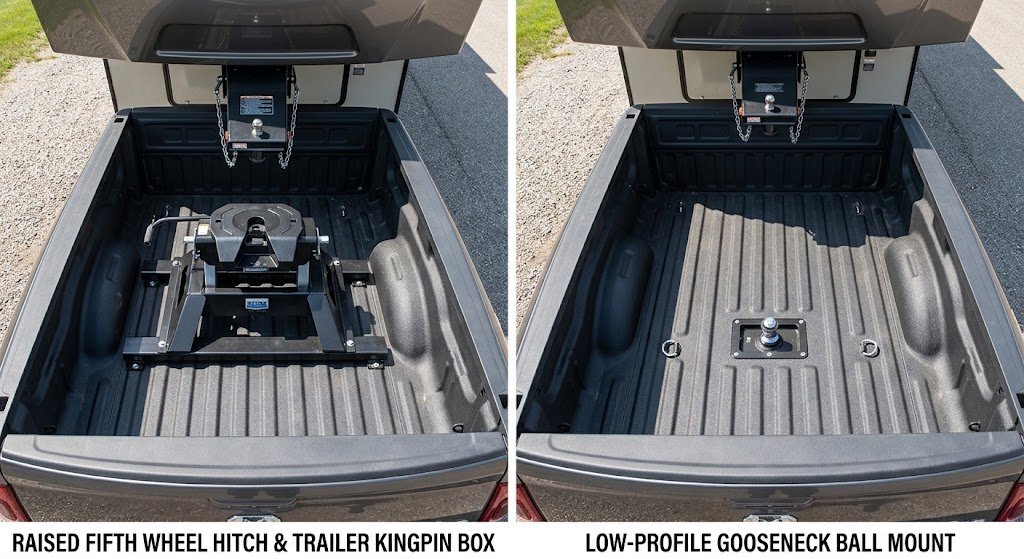
Coupling mechanism. A fifth wheel hitch clamps a kingpin with a jaw mechanism. A gooseneck hitch drops a coupler onto a ball, the same basic connection as a bumper hitch.
Mounting height. Fifth wheel hitches sit on a raised platform above the bed floor. Gooseneck hitches mount low, near or at bed floor level.
Typical trailer types. Fifth wheel hitches are built for RVs. Gooseneck hitches are built for livestock, flatbed, and equipment trailers.
Ride and pivot feel. The raised fifth wheel pivot point tends to feel more stable for tall, boxy RV trailers because it keeps the pivot closer to the trailer's actual center of leverage. A gooseneck's lower pivot point works well for the lower-profile trailers it's designed for.
Bed usability. A fifth wheel platform takes up more bed space and can interfere with hauling other cargo. A gooseneck ball mount is far less intrusive and some models fold flush or pop out only when needed, leaving the bed usable for other jobs.
Installation complexity. Fifth wheel hitches typically need rails or a puck system installed in the bed. Gooseneck installations are usually simpler since they only need a single ball mount and safety chain loops.
Cost. Gooseneck hitches are generally less expensive than fifth wheel hitches, largely because of the simpler hardware involved.
Capacity. Both types are available in heavy-duty ratings, but fifth wheel hitches are more commonly rated for the higher pin weights found on large RVs, while gooseneck hitches are rated for the trailer types they're paired with.
Which Hitch Is Right for Your Travel Trailer or Fifth Wheel RV?
If you're towing a fifth wheel travel trailer, you need a fifth wheel hitch. RV manufacturers build the kingpin box and landing gear specifically for that raised, jawed connection, and a gooseneck ball won't match up with it without an adapter.
That said, gooseneck adapters for fifth wheel RVs do exist. Some owners use a gooseneck-to-fifth-wheel adapter, often because they already tow a livestock or flatbed trailer with a gooseneck setup and want to use the same truck bed hardware for an RV. These adapters work, but they add a mechanical step and aren't a substitute for a properly installed fifth wheel hitch if RV towing is your primary use.
If you're cross-shopping a fifth wheel against a travel trailer that uses a bumper-pull weight distribution hitch instead, that's a different comparison worth working through before you decide on a trailer type.
What Should You Consider Before Choosing a Hitch Setup?
Truck bed length. Short bed trucks, typically under 6.5 feet, often need a sliding fifth wheel hitch to avoid the trailer clipping the truck cab during sharp turns.
Pin weight vs. hitch rating. Match the hitch's rated capacity to your trailer's actual pin weight, loaded, not just the empty spec sheet number.
Puck system vs. rail system. Puck systems mount flush with the bed floor and are easier to remove when not towing. Rail systems are typically more affordable but stay bolted in permanently.
Bed usability needs. If you regularly haul cargo in the bed when not towing, a removable puck-mounted hitch keeps the bed clear when it's out.
Adapter needs. If you already have a gooseneck setup and want to tow a fifth wheel RV occasionally, ask about adapter compatibility with your specific trailer's kingpin box before assuming it will fit.
What Common Mistakes Do Buyers Make When Choosing Between These Hitches?
Assuming any bed-mounted hitch works for any bed-mounted trailer. Fifth wheel and gooseneck hardware aren't interchangeable without an adapter, and mismatched setups are a safety issue, not just an inconvenience.
Underestimating short bed clearance issues. Buyers sometimes install a fixed fifth wheel hitch on a short bed truck and then discover the trailer nose can hit the cab in tight turns.
Skipping the pin weight check. A hitch rated below the trailer's actual pin weight, especially loaded pin weight, is a real overload risk.
Not planning for bed usage. Owners who need the bed for work or hauling sometimes install a fixed rail system when a removable puck setup would have suited them better.
Choosing based on price alone. Gooseneck hardware is often cheaper, but that's because it's built for a different trailer connection, not because it's a budget version of a fifth wheel hitch.
How A&L RV Sales Can Help
Choosing the right hitch setup depends on your specific truck, bed length, and the trailer you're towing or planning to buy. Our team can walk through pin weight, hitch capacity, and installation options before you commit to hardware.
Browse our fifth wheel inventory to see current pin weights and specs, check our tow guides to confirm what your truck can handle, or contact our team to talk through financing and the right hitch setup for your rig.
Frequently Asked Questions
Can you convert a gooseneck hitch to a fifth wheel hitch?
Not directly, since the two use different coupling hardware. You can use a gooseneck-to-fifth-wheel adapter, which lets a truck with an existing gooseneck ball tow a fifth wheel RV, but it's an added component rather than a true conversion of the hitch itself.
Which hitch is better for towing a fifth wheel RV?
A dedicated fifth wheel hitch is the better option for fifth wheel RVs. It's built specifically for the RV's kingpin box and landing gear, and it typically offers a smoother pivot and higher pin weight capacity than a gooseneck adapter setup.
Do gooseneck hitches work with fifth wheel trailers?
Only with an adapter designed to bridge the gooseneck ball to a fifth wheel kingpin. Without an adapter, the two systems aren't compatible, since a gooseneck ball has no jaw mechanism to clamp a kingpin.
How much weight can a fifth wheel hitch tow compared to a gooseneck?
Both are available in a range of capacities depending on the model, and heavy-duty versions of each can handle large loads. The right comparison is matching a specific hitch's rated capacity to your actual trailer's pin weight, rather than assuming one type universally out-tows the other.
Do I need a special truck bed for a fifth wheel hitch?
You need a bed long enough to clear the trailer during turns, generally an 8-foot bed for a fixed hitch, or a sliding hitch if you have a shorter bed. The bed also needs to support the mounting rails or puck system the hitch requires.
Is a gooseneck hitch cheaper than a fifth wheel hitch?
Generally yes, since gooseneck hardware is mechanically simpler. That cost difference reflects the type of trailer connection it's built for, not overall towing capability, so it's not a reason to choose one over the other for an RV.
Can a short bed truck use a fifth wheel hitch?
Yes, with a sliding fifth wheel hitch that shifts backward during sharp turns to keep the trailer from contacting the cab. A fixed hitch on a short bed truck can cause clearance problems when turning tightly.
Final Takeaway
A fifth wheel hitch and a gooseneck hitch both move the connection point into the truck bed, but they're built for different jobs. Fifth wheel hitches are the right choice for towing a fifth wheel RV, while gooseneck hitches are built around livestock and flatbed trailers. Matching the hitch type, and its rated capacity, to your actual trailer is what keeps the setup safe and easy to live with.
If you're shopping for a fifth wheel or want help figuring out the right hitch setup for your truck, our team at A&L RV Sales can walk through your options, financing, and current inventory.