
How Often Should You Reseal a Travel Trailer Roof?
Roof leaks cause more expensive damage to travel trailers than almost any other single issue, and nearly all of that damage traces back to sealant that was allowed to crack, shrink, or separate long before anyone noticed. Knowing the right reseal schedule for your specific roof type is one of the cheapest insurance policies you can give your trailer.
Why Roof Sealant Fails Faster Than You'd Expect
Roof sealant sits directly exposed to UV rays, temperature swings, and standing water, which breaks down even high-quality lap sealant far faster than most other components on your trailer. Rubber and TPO membranes flex slightly with every temperature change, and that constant micro-movement eventually causes sealant to crack at the exact points where it needs to hold, around vents, skylights, and roof seams.
Trailers stored outdoors under direct sun or parked beneath trees see accelerated wear compared to units kept in covered or shaded storage, since falling debris and constant UV exposure both speed up sealant breakdown considerably.
Recommended Inspection and Reseal Schedule
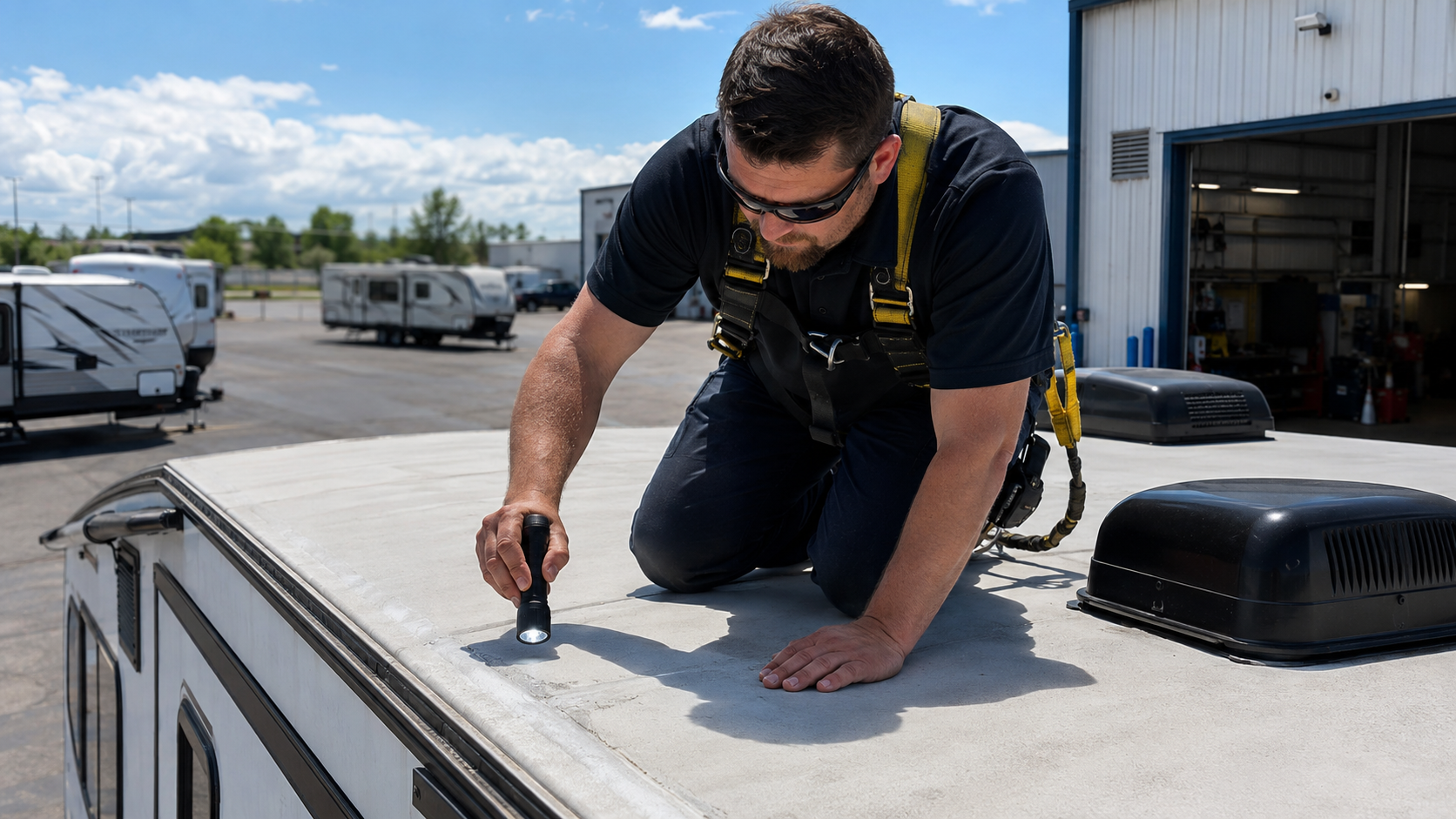
Every six months — visually inspect the entire roof for cracking, peeling, or separating sealant around every vent, seam, and skylight
Every 3,000 towing miles—check roof seals and wheel bearings specifically, since these two items cause the majority of preventable travel trailer damage
Every 1 to 3 years—perform a full lap sealant reseal around all vents, antennas, and skylights, even if no obvious cracking is visible yet
Every 3 to 5 years—complete a full membrane recoat on rubber or TPO roofs, depending on climate severity and storage conditions
Every 5 to 7 years—fiberglass or aluminum roofs generally need a full recoat, since they hold up longer than rubber or TPO under normal conditions
Signs Your Roof Needs Attention Now, Not Later
Water stains or discoloration on interior ceiling panels almost always mean a roof leak has already been active for some time, since ceiling damage rarely shows up the moment a leak begins. A soft or spongy feeling anywhere on the roof deck signals wood rot underneath the membrane, which is a far more serious and expensive repair than a simple reseal.
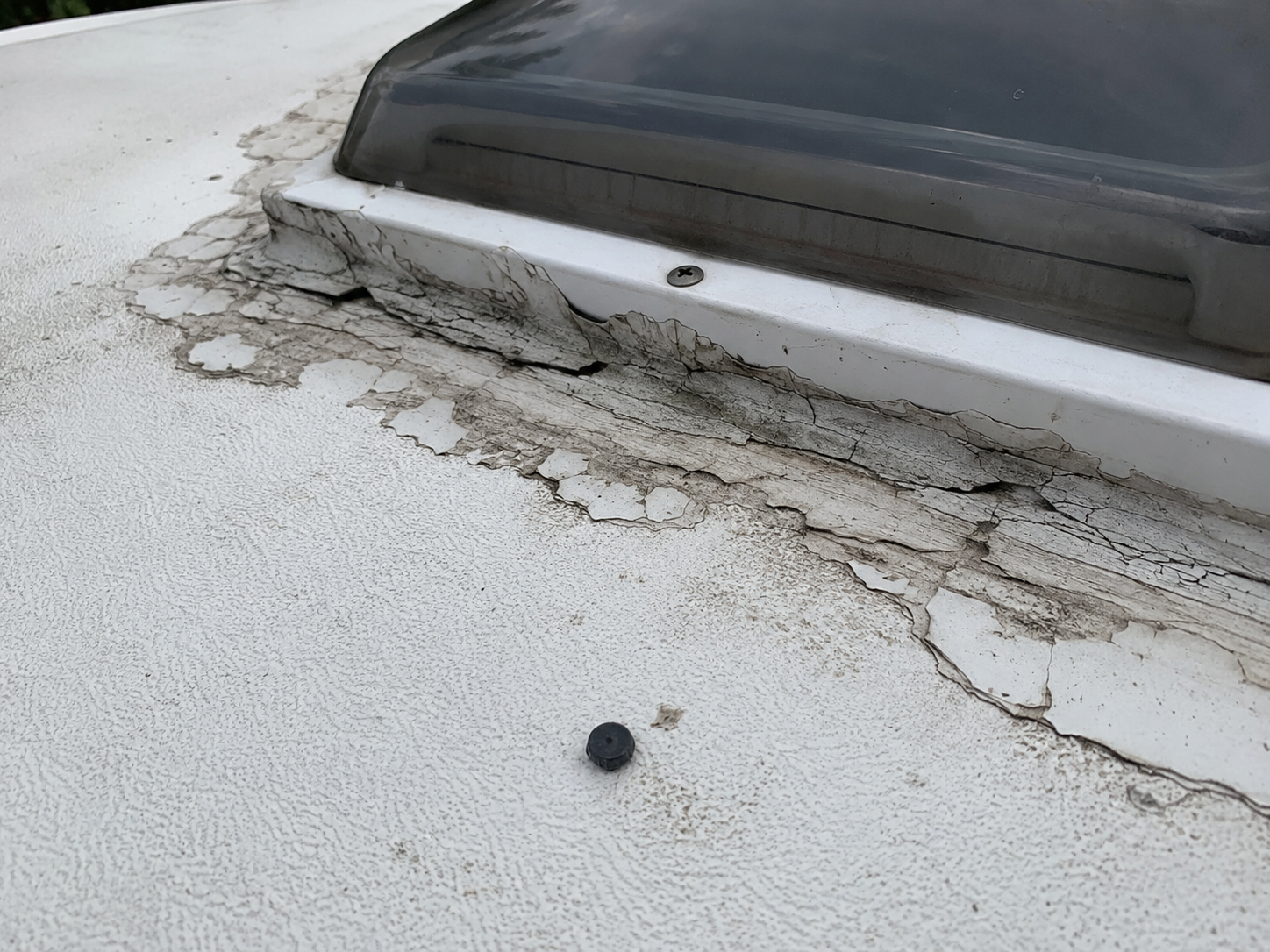
Visible cracking, bubbling, or gaps in the sealant around any roof-mounted fixture, including air conditioners, vents, and antennas, should be addressed immediately rather than waiting for a scheduled inspection. A musty smell inside the trailer, even without visible staining, often indicates hidden moisture intrusion that hasn't yet become obvious on the surface.
Rubber and TPO Roofs Need More Frequent Attention
Rubber and TPO membrane roofs are the most common roof type on travel trailers, and they require more frequent sealant checks than fiberglass or aluminum alternatives. Clean these roofs and inspect the sealant every six months, spot-treating any cracked or worn sections immediately rather than waiting for the next scheduled full reseal.
A complete membrane recoat every three to five years extends the roof's overall lifespan significantly, and skipping this step is one of the most common reasons rubber roofs fail earlier than their expected service life.
Fiberglass and Aluminum Roofs Are More Forgiving
Fiberglass and aluminum roofs generally hold up longer under UV exposure and temperature swings, requiring a full recoat only every five to seven years under normal conditions. Even with this longer interval, an annual inspection and spot sealant touch-up around vents and seams keeps small issues from becoming larger structural problems.
Older Travel Trailers Need Closer Monitoring
Trailers older than ten years should be inspected every six months without exception, regardless of roof material, since aging sealant and worn substrate underneath become increasingly likely to fail without warning. A complete reseal every three to five years is generally recommended for older units, even if the roof still looks acceptable on casual inspection, since underlying wood substrate can deteriorate long before surface sealant shows obvious cracking.
DIY Spot Sealing vs. Professional Reseal
Small cracks and pinholes can often be addressed with a compatible lap sealant applied directly over the existing material, since most sealants bond well to themselves without requiring a full strip-down. A complete reseal, however, involves removing all old sealant down to a clean surface first, which is a labor-intensive job best left to a certified technician if you're not confident working at height or handling roof-specific materials correctly.
Professional leak testing using pressure diagnostics can identify moisture entry points that aren't yet visible from a simple surface inspection, catching problems well before they turn into mold, delamination, or structural rot. This kind of diagnostic work is difficult to replicate with a DIY approach, which is why an annual comprehensive service check matters even for owners comfortable doing their own spot sealing.
Building Roof Care Into Your Regular Maintenance Routine
Pair your roof inspection with your regular towing prep, checking seals every time you hitch up for a longer trip in addition to the standard six-month schedule. Keeping the roof clear of leaves, branches, and standing water after storms also meaningfully extends sealant life, since trapped debris accelerates the exact deterioration that leads to premature cracking.
Staying ahead of your travel trailer's roof sealant schedule is one of the lowest-cost, highest-impact maintenance habits any owner can build, since the alternative, water damage and structural rot, almost always costs far more to fix than a routine reseal ever would.months—visually