How do you keep moisture and mold out of a travel trailer?
To keep moisture and mold out of a travel trailer, control humidity inside the unit, fix leaks the moment you find them, and keep air moving. Vent when you cook and shower, run a dehumidifier while parked, inspect roof seals and window seams on a schedule, and never store the trailer damp. Mold needs moisture to grow, so cutting off water sources is the most reliable prevention.
Why does moisture build up inside a travel trailer?
Moisture comes from two places: water that gets in from outside, and humidity created by the people inside.
A small, closed-up space makes both problems worse. Breathing, cooking, showering, and wet gear all add water vapor to the air. When that warm, humid air hits a cold surface like a window, roof vent, or metal frame, it condenses into liquid. That water soaks into curtains, cabinet backs, and carpet edges, which is where mold usually starts.
Outside water is the second source. Cracked roof sealant, worn window gaskets, loose trim, and plumbing leaks let water into wall cavities and floors. These leaks are quiet, and they often do more damage because you cannot see them.
Owners in humid parts of the country, including Virginia, the Carolinas, Georgia, and Tennessee, deal with muggy summers and damp storage conditions. For them, moisture control should be a routine habit, not a one-time fix.
How do you keep humidity down inside a travel trailer?
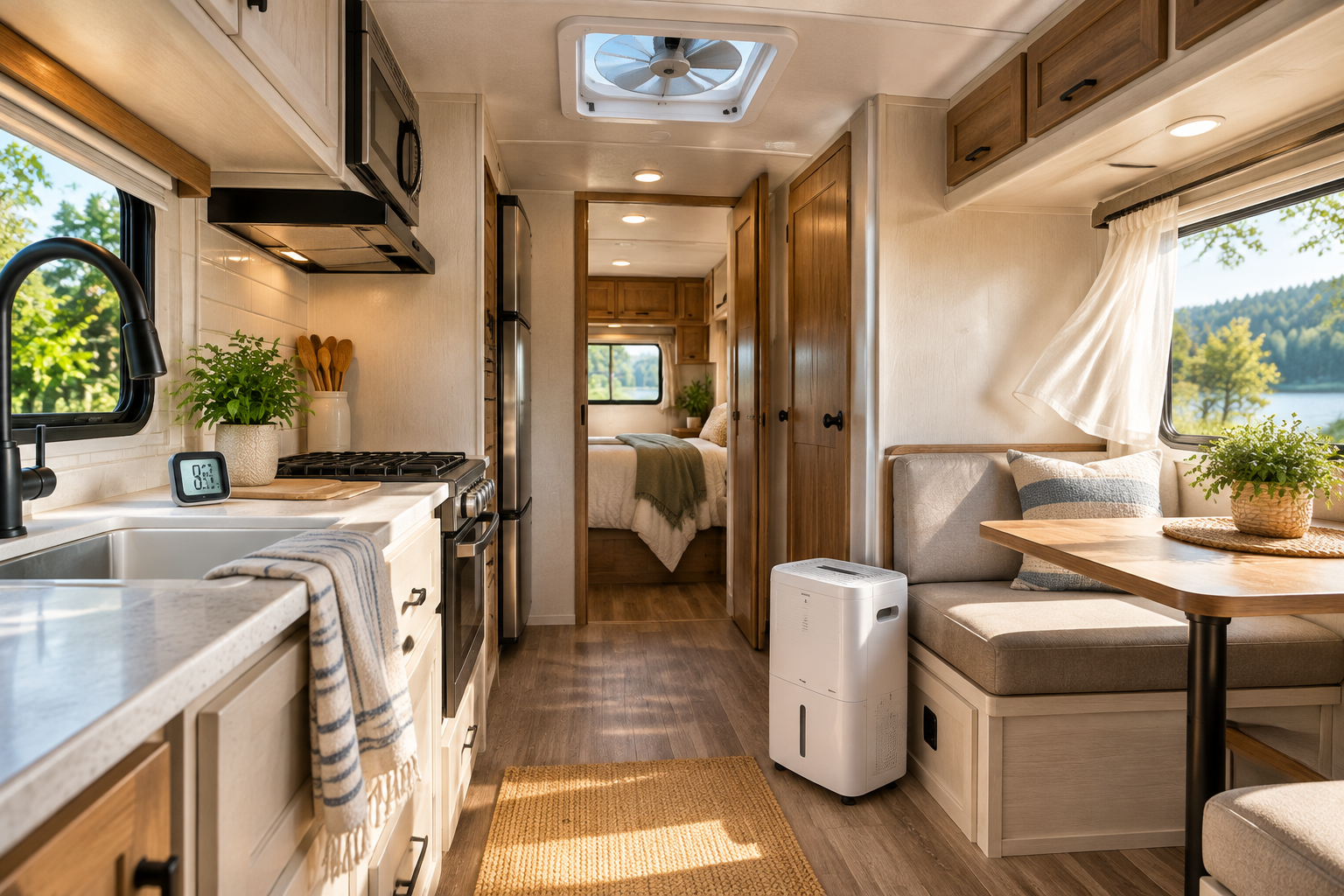
Keep humidity down by venting moisture at the source, running a dehumidifier when the trailer is closed up, and keeping air circulating. Many owners aim for indoor humidity below roughly 50 percent, and an inexpensive hygrometer shows you where you stand.
Here is a simple routine that works for most travel trailers:
Vent while you cook and shower. Run the range hood and bathroom fan, or crack a window or roof vent.
Wipe wet surfaces. Dry shower walls, windows, and countertops after use.
Run a small dehumidifier on shore power. When you have no hookups, moisture absorbers help, but they need regular emptying or replacing.
Keep air moving. Use a ceiling fan, open cabinet doors, and lift mattress edges so air can reach hidden spots.
Dry gear outside first. Towels, rain jackets, and camp chairs should not go in the trailer wet.
Watch your heat source. Burning propane releases water vapor, so ventilate when the furnace or a portable heater runs for long periods.
Place a hygrometer. A reading that keeps climbing tells you to act before mold shows up.
If you camp in a humid climate, a compact electric dehumidifier is one of the most useful, lowest-cost upgrades you can make.
Where do travel trailer leaks start, and how often should you check?
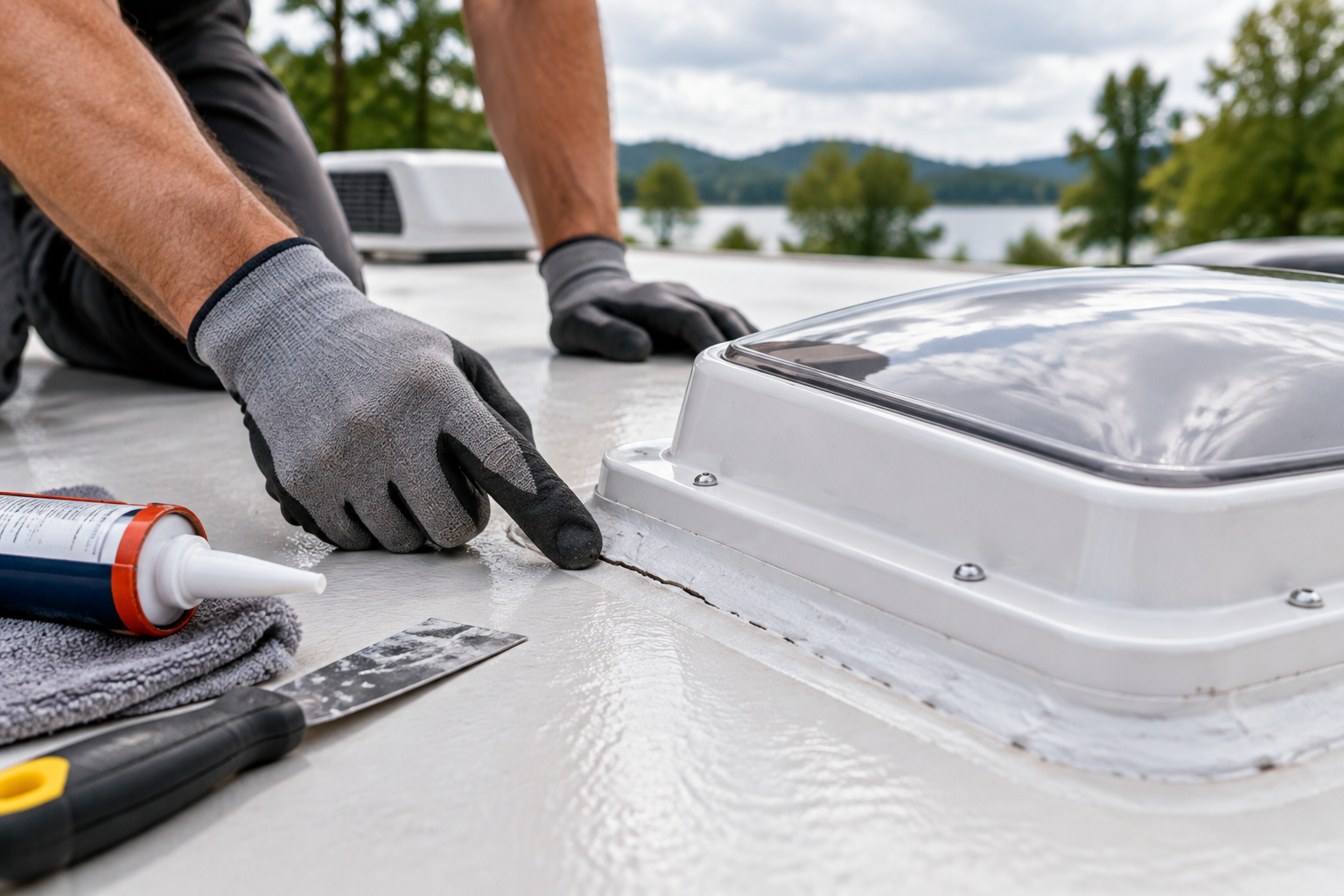
Most leaks start at seams and openings: roof penetrations, window and door edges, slide-out seals, and plumbing connections. Inspect these areas at least a couple of times a year, after heavy storms, and after long trips. Follow the maintenance schedule in your owner's manual.
Roof vents, skylights, and A/C base: Look for cracked, peeling, or shrinking sealant. Reseal with a product made for your roof type.
Windows and doors: Look for hard gaskets, gaps, and water stains. Replace gaskets and reseal edges.
Slide-out seals: Look for cracks and flattened or sticky rubber. Clean, condition, or replace.
Sidewall seams and trim: Look for lifting caulk and bubbles in the siding. Reseal quickly.
Plumbing: Look for drips under sinks, near the water heater, and at drains. Tighten or replace fittings.
Underbelly: Look for sagging or damp insulation. Have it inspected.
One detail matters more than most owners realize: roof sealant is not one-size-fits-all. Different roof materials, such as EPDM, TPO, and fiberglass, call for compatible products. Using the wrong one can fail early or cause damage. If you are not sure what your roof needs, ask your RV service department before you buy a tube of sealant.
How do you prevent mold when storing a travel trailer?
To prevent mold in storage, clean and fully dry the interior, drain the water system, open up cabinets and cushions for airflow, add moisture absorbers, and make sure the roof and seals are in good shape before you park it.
A few details make a big difference:
Empty everything. Remove food, clean surfaces, and dry them completely.
Drain the water system. Empty the fresh, gray, and black tanks and open the low-point drains.
Prop the fridge open. A closed, dark refrigerator is a common source of musty smells.
Let air reach the mattress. Stand cushions on edge or lift mattresses.
Use moisture absorbers. Check them monthly and replace them as needed.
Choose the right cover. A tight plastic tarp traps condensation against the roof. A breathable RV cover, or covered storage, is a better choice.
Park it level. Water pooling on the roof finds every weak spot.
If the trailer will sit for months, plan a visit now and then to air it out and check for drips or odors.
What are the signs of mold or hidden moisture?
A musty smell is usually the first sign. Other warning signs include dark spots in ceiling corners, behind cushions, or inside cabinets, along with these:
Peeling wallpaper or bubbling wall paneling
Water stains around windows, vents, or slide-outs
Soft or spongy spots in the floor, especially near doors and slides
Condensation on windows that shows up again and again
A soft floor or wall panel deserves special attention. It can point to water damage that has been building for a while, not just surface mold.
What should you do if you find mold?
For small spots on hard surfaces, wear gloves and a mask, ventilate the trailer, and clean with a cleaner made for mold. Then find the moisture source and fix it. If you skip that step, the mold will come back.
If the smell lingers, the mold keeps spreading, or a floor or wall feels soft, have a professional inspect the trailer. Hidden water damage often needs repair, not just cleaning. People with allergies or asthma should be especially careful around mold.
What common mistakes lead to moisture problems?
Most moisture problems come from small habits that add up. These are the ones we see most often:
Ignoring tiny sealant cracks. A hairline gap today can become a soaked wall after a few storms.
Closing up a damp trailer. Trapped moisture has nowhere to go.
Wrapping the trailer in a non-breathable tarp. This traps condensation.
Covering smells with air fresheners. A musty smell is a symptom, not the problem.
Skipping inspections after storms or long trips. Road vibration and weather loosen seals.
Using the wrong sealant. Compatibility with your roof material matters.
Drying laundry inside. That is a lot of water vapor in a small space.
What should you check when buying a used travel trailer?
When you shop for a used travel trailer, look and smell for water damage before you fall in love with the floorplan. Check for soft floors near doors and slide-outs, ceiling stains, fresh sealant that may be covering old leaks, and any musty odor. Ask for service records, and have the roof and seals inspected.
A quick walk-through checklist:
Press on the floor near the entry door, bathroom, and slides
Look at ceiling corners and around every vent and window
Open cabinets and check the back walls
Smell the closets and under-bed storage
Look under sinks for water marks
Ask when the roof was last inspected or resealed
A used unit can be a great value when it has been maintained and inspected. A new unit starts with fresh seals, but it still needs regular checks. If you want to compare both paths, browse used travel trailers and new travel trailers, or see the full travel trailer inventory. It is also worth reading about RV warranty options so you know what protection is available.
How can A&L RV Sales help?
Moisture prevention is easier when you have people to ask. A&L RV Sales serves RV shoppers and owners through the locations listed on our locations page, including Richmond, VA, Chocowinity, NC, Sevierville, TN, and Lake Park, GA.
Here is how we can help:
Suspect a leak or musty smell? Contact our service team to talk through what you are seeing.
Dealing with damage? Learn about our collision center.
Ready for a different trailer? Ask about a trade-in and review financing options.
Want to see what is on sale? Check current RV specials.
If you would rather talk to a person, reach out to the A&L RV Sales team and ask for an expert.
Frequently Asked Questions
Can a travel trailer get mold if it is not being used?
Yes. A trailer that sits closed up can trap humidity, and small leaks go unnoticed when nobody is inside. Damp cushions, a closed refrigerator, and warm weather make it worse. Clean and dry the interior before storage, add moisture absorbers, and check the unit every month or so.
Should I leave a dehumidifier running in my travel trailer?
If you have shore power and the trailer is closed up, a dehumidifier can run continuously with a drain hose or a large collection tank. Check it often, since small tanks fill quickly. When you have no power, moisture absorbers are a lower-effort alternative, though they need regular replacing.
What humidity level is best inside an RV?
Many RV owners aim for roughly 30 to 50 percent indoor humidity. Above that range, condensation and mold become more likely. A simple hygrometer costs little and helps you spot problems early, especially during humid summers or after a rainy trip.
How do I get rid of a musty smell in a travel trailer?
Start by finding the source. Check under sinks, inside cabinets, behind cushions, and around windows and vents. Dry any damp areas, clean surface mold, and improve airflow. If the smell stays, moisture may be hidden in a wall or floor, so have the trailer inspected.
Does condensation on the windows mean my trailer has a leak?
Not necessarily. Condensation usually comes from indoor humidity meeting a cold surface, especially when you cook, shower, or sleep in a closed trailer. But if you also see stains, soft spots, or drips, check for a leak. Vent more, dry surfaces, and use a dehumidifier.
Is it safe to camp in a travel trailer that has mold?
It is best to fix the problem first. Small surface mold can be cleaned, but you should also correct the moisture source. If mold is widespread or floors and walls feel soft, get a professional inspection. People with allergies or asthma should avoid sleeping in a moldy space.
Final Takeaway
Keeping a travel trailer dry comes down to three habits: control indoor humidity, inspect seals and roof areas on a schedule, and store the unit clean, dry, and ventilated. Catch small problems early, and you avoid the expensive ones.
If you have questions about a musty smell or a suspected leak, or you are ready to shop for your next trailer, contact A&L RV Sales or browse our travel trailers.