What Is a Destination Trailer and Who Is It For?
A destination trailer sits somewhere between a traditional travel trailer and a small vacation cottage.
It is still a towable RV, but it is designed primarily for campers who plan to stay in one location for weeks or months at a time rather than tow their RV to a new campground every few days.
That difference shapes almost everything about the RV.
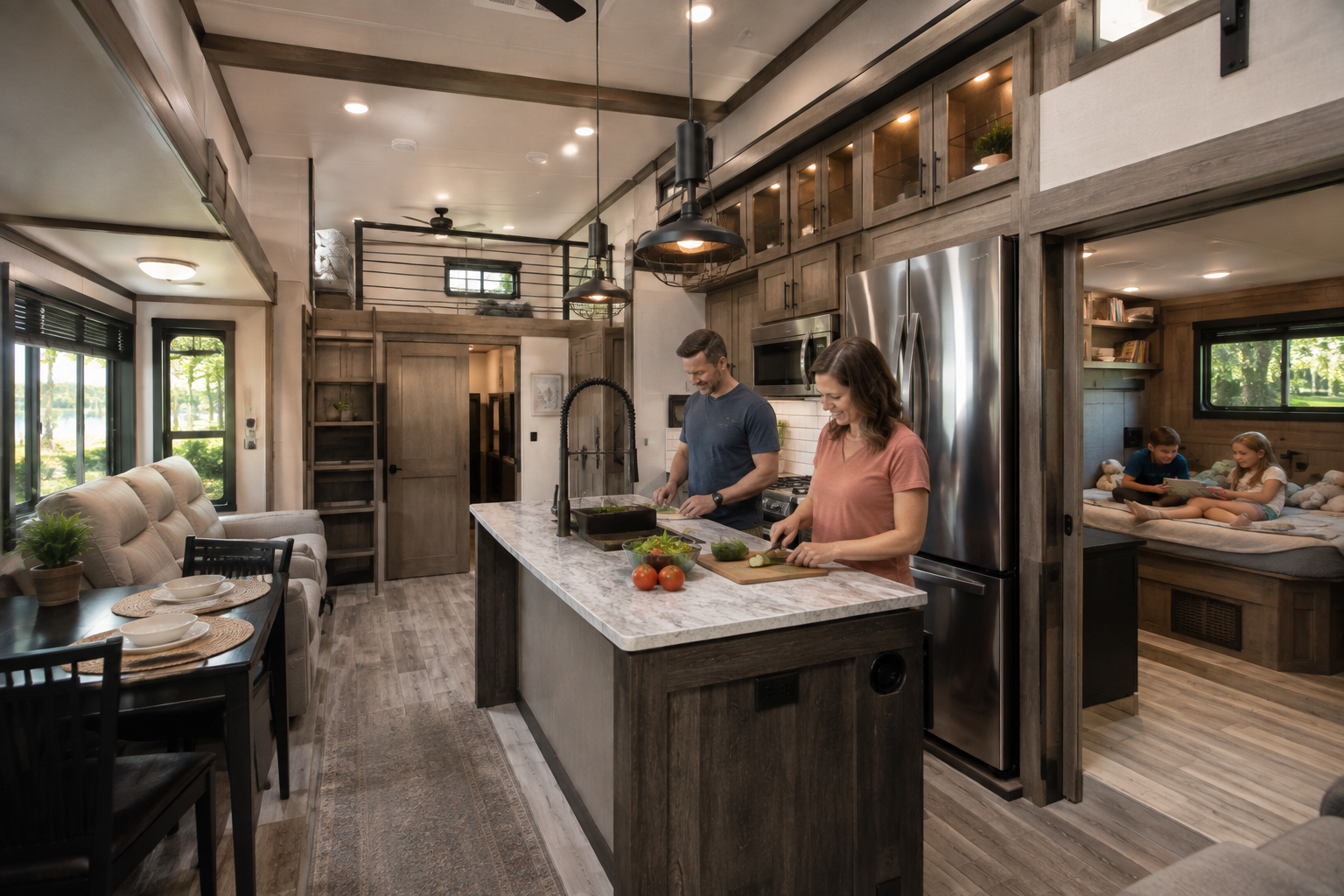
Destination trailers tend to be larger, heavier, and more residential than conventional travel trailers. Many have tall ceilings, multiple slide-outs, large kitchens, residential refrigerators, sliding patio-style doors, spacious bedrooms, lofts, and enough storage for extended stays.
A&L RV Sales currently carries destination trailers from brands and model families including Alliance Benchmark, Forest River Wildwood Grand Lodge, Forest River Salem Grand Villa, and Cherokee Timberwolf. Current inventory ranges from roughly 28 feet to about 45 feet, with some floorplans sleeping as many as 10 people.
So, who should actually buy one?
What Exactly Is a Destination Trailer?
A destination trailer is a large towable RV designed primarily for extended or seasonal stays at one campsite.
It has wheels, axles, a hitch, holding tanks, plumbing, electrical systems, appliances, and many of the other components found in a traditional travel trailer.
What changes is the priority.
A conventional travel trailer is generally designed around mobility. Manufacturers have to balance interior space with weight, aerodynamics, overall length, and how easily the trailer can be moved from place to place.
A destination trailer places much more emphasis on living space and residential comfort.
That is why destination trailers commonly offer features such as:
Large slide-outs
High ceilings
Residential-style refrigerators
Kitchen islands
Large pantries
Freestanding dining areas
Spacious living rooms
Fireplaces
King or queen bedrooms
Loft sleeping spaces
Large bathrooms
Patio-style entry doors
Extensive cabinet and wardrobe storage
A&L RV Sales describes destination trailers as being particularly well suited to extended stays, seasonal campsites, and campers who want a more comfortable home-away-from-home experience.
How Is a Destination Trailer Different From a Travel Trailer?
The simplest difference is how often you intend to move it.
Travel trailers are generally better suited to frequent towing.
You might take one to the Smoky Mountains in May, the beach in June, a state park in July, and another campground in the fall.
A destination trailer is better suited to a different pattern.
You tow or transport it to a campground, lake property, seasonal site, or RV resort, set it up carefully, and leave it there for an extended period.
Because mobility is less important, manufacturers can dedicate more of the design to interior space.
That is also why destination trailers can become quite large. A&L's current inventory includes units around 42 to 45 feet long with dry weights above 13,000 or 14,000 pounds.
Who Is a Destination Trailer Best For?
Destination trailers are not simply "big travel trailers."
They work best for specific types of campers.
Seasonal Campers
Seasonal camping is probably the clearest use case.
If you rent the same campsite for an entire summer or keep an RV at a lake, mountain resort, or campground for several months, frequent towing is not especially important.
Comfort is.
A destination trailer gives you more room to settle in without giving up the ability to relocate the RV later.
That makes it attractive for people who want a summer retreat without purchasing a permanent cabin.
Couples Who Spend Months at the Campground
A large destination trailer can make extended camping considerably more comfortable for couples.
Instead of living around compact furniture and limited storage, you may have:
A larger master bedroom
Full-size wardrobes
Residential kitchen appliances
Separate dining and living areas
Theater seating
Additional pantry space
Larger bathrooms
For a weekend, these features may feel like luxuries.
For a three-month stay, they can change the entire ownership experience.
Families Who Need More Space
Destination trailers can also make sense for families, especially when the RV will stay at the same campground.
Some floorplans include loft sleeping areas, separate sleeping zones, multiple bathrooms, or large central living spaces.
A&L's current Alliance Benchmark inventory includes destination trailers that sleep between five and 10 people, while the Forest River Wildwood Grand Lodge models currently listed can sleep six to eight.
That extra separation can be extremely valuable when parents and children are sharing the RV for several weeks.
People Who Want a Vacation-Home Feel
One of the biggest reasons buyers choose destination trailers is that they feel less like compact campers and more like small vacation homes.
Large windows, sliding doors, tall ceilings, residential appliances, and substantial furniture can make the interior feel noticeably different from a lightweight trailer.
The current Alliance Benchmark models carried by A&L are examples of this more residential approach, with large destination-trailer floorplans designed around extended stays.
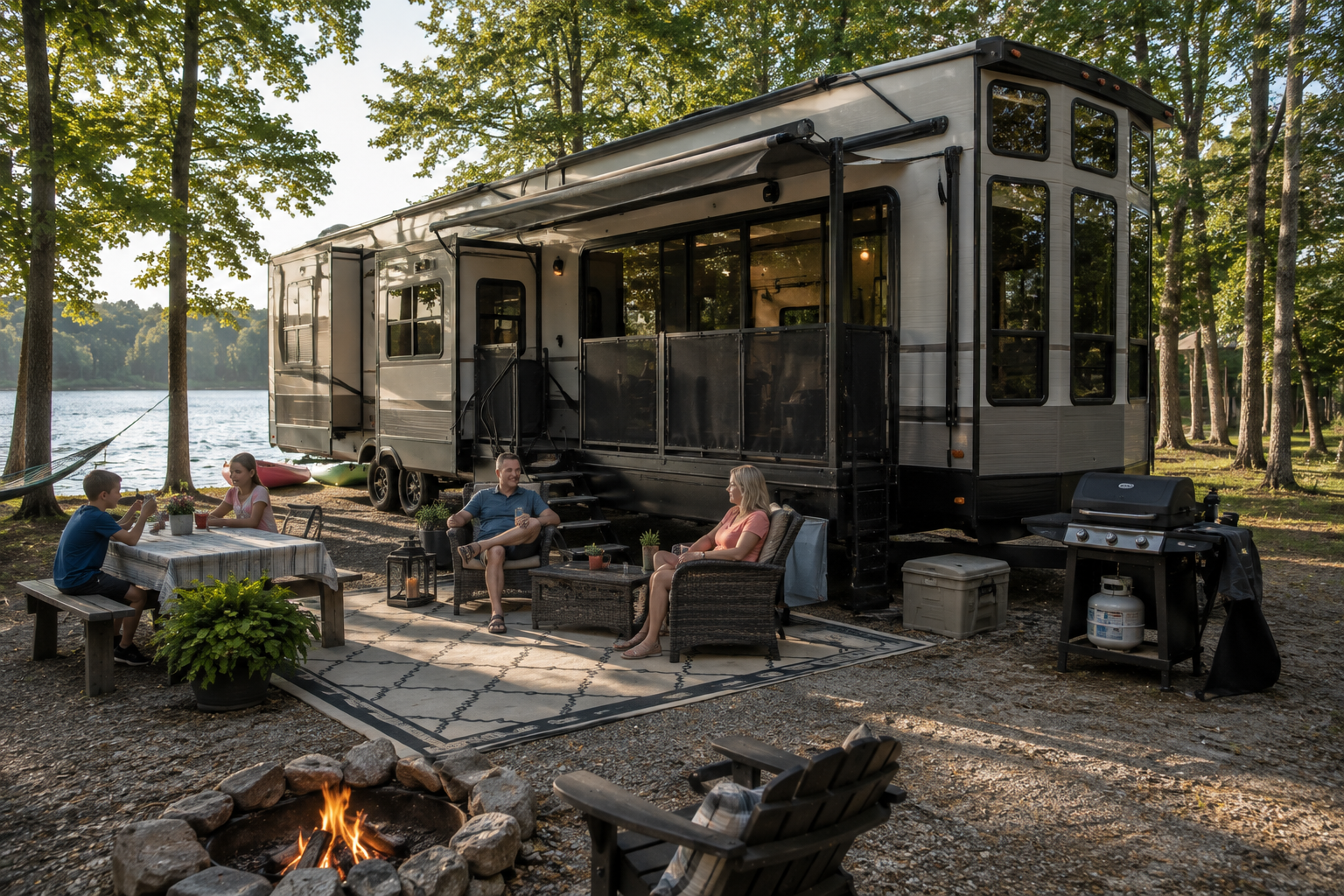
This setup works especially well when campers build an outdoor living area around the RV with:
Patio furniture
Grills
Outdoor rugs
Fire pits
Storage boxes
Bicycles
Kayaks
Decks where campground rules permit
Once the site is established, the RV becomes the center of a seasonal retreat rather than simply transportation for a weekend trip.
Who Should Probably Not Buy a Destination Trailer?
Destination trailers are excellent for the right buyer, but their strengths become disadvantages if you camp differently.
Frequent Road-Trippers
If you enjoy visiting a different campground every weekend, a destination trailer probably is not your ideal RV.
Their length and weight make frequent towing more involved.
A conventional travel trailer or fifth wheel will often provide a better balance between comfort and mobility.
Buyers With Smaller Tow Vehicles
Destination trailers can be extremely heavy.
A&L's current Forest River Wildwood Grand Lodge inventory includes models with dry weights of roughly 13,749 and 14,404 pounds. Alliance Benchmark models currently listed weigh more than 14,000 pounds dry.
That is before considering cargo.
Always verify the towing capacity, payload, GCWR, hitch rating, and other limits of the specific tow vehicle.
Some destination-trailer owners choose professional delivery because the RV will rarely move once it reaches the seasonal site.
Campers Who Prefer Small State-Park Sites
A 40-plus-foot destination trailer can limit campground choices.
Many older public campgrounds were designed before today's largest RVs became common.
Before buying, confirm:
Maximum RV length
Site width
Slide-out clearance
Road access
Turning space
Electrical service
Water availability
Sewer hookups
The perfect destination trailer is not useful if it cannot physically fit at your favorite campground.
Destination Trailer vs. Fifth Wheel
A fifth wheel can also offer substantial living space, so buyers often compare the two.
The difference again comes down to travel style.
A fifth wheel is usually the stronger choice if you want a large RV but still expect to tow regularly.
The fifth-wheel hitch design places the connection in the truck bed and can offer excellent highway stability.
A destination trailer makes more sense when the RV will spend most of its time parked.
If you travel for a month but change campgrounds every few days, consider a fifth wheel.
If you spend the entire summer at the same lake campground, consider a destination trailer.
What Features Should You Look for in a Destination Trailer?
Do not choose one simply because it is the largest RV available.
Focus on how the floorplan will work after several weeks of living in it.
For Couples
Consider:
Large rear living areas
Theater seating
Kitchen islands
Spacious bedrooms
Large wardrobes
Freestanding dining tables
For Families
Look for:
Lofts
Extra sleeping areas
Multiple bathrooms
Large refrigerators
Big pantries
Additional storage
For Entertaining
Prioritize:
Large living rooms
Patio-style entry doors
Open kitchens
Multiple seating areas
Spacious dining areas
A&L's current inventory illustrates how different destination-trailer layouts can be. The Alliance Benchmark 42LFT sleeps five, the Benchmark 44LFT sleeps up to 10, and the Wildwood Grand Lodge lineup includes floorplans sleeping six to eight.
Do Destination Trailers Need Special Maintenance?
Being parked most of the year does not eliminate RV maintenance.
In some ways, long-term outdoor exposure makes routine inspection even more important.
Pay attention to:
Roof seals
Exterior sealants
Slide-out seals
Plumbing
Water heater
Air conditioning
Furnace
Appliances
Batteries
Tires
Propane systems
Winterization
A&L RV Sales operates service departments across its eight locations in Tennessee, Georgia, North Carolina, and Virginia, which creates a natural ownership resource for buyers who need seasonal maintenance or repairs.
Is a Destination Trailer Good for Full-Time Living?
A destination trailer can provide many of the features people want for long-term RV living, including residential kitchens, large bedrooms, storage, and separate living areas.
However, whether a specific model is intended or warrantied for full-time occupancy depends on the manufacturer.
You should also consider climate, campground rules, insurance, utilities, winterization, and whether you expect to relocate frequently.
If your version of "full-time" means remaining at one RV resort or private property for extended periods, a destination trailer may fit very well.
If full-time living means crossing the country continuously, a fifth wheel may offer more practical mobility.
How Much Do Destination Trailers Weigh?
Weight varies significantly by model.
A&L's current destination-trailer inventory demonstrates that range clearly.
The Cherokee Timberwolf models currently shown on order are listed around 8,235 pounds dry, while larger Alliance Benchmark and Wildwood Grand Lodge models range from roughly 13,700 to more than 14,700 pounds dry.
Always remember that dry weight is not the same as loaded camping weight.
Food, clothing, batteries, propane, water, furniture, and camping equipment all add weight.
Is a Destination Trailer Worth It?
A destination trailer can be an excellent value if you will actually use the residential space it provides.
It is particularly worth considering if:
You already have a seasonal campsite
You spend months at one campground
You want more space than a conventional travel trailer
You regularly camp with children or guests
You value residential kitchens and storage
You do not plan to tow frequently
You want an RV that feels more like a vacation cottage
It may be unnecessary if you only camp several weekends per year or prefer moving constantly.
The value comes from using the destination trailer as an extended-stay living space rather than simply a large RV.
Final Thoughts: Is a Destination Trailer Right for You?
A destination trailer is designed for campers who want to arrive, settle in, and stay awhile.
It combines the flexibility of a towable RV with the space and comfort normally associated with much more permanent vacation accommodations.
For seasonal campers, families spending an entire summer at one campground, couples enjoying extended stays, or anyone building a semi-permanent lake or resort setup, it can be one of the most comfortable towable RV options available.
A&L RV Sales currently offers destination trailers ranging from lighter Cherokee Timberwolf floorplans to large Alliance Benchmark, Forest River Wildwood Grand Lodge, and Salem Grand Villa models across its multi-state dealership network.
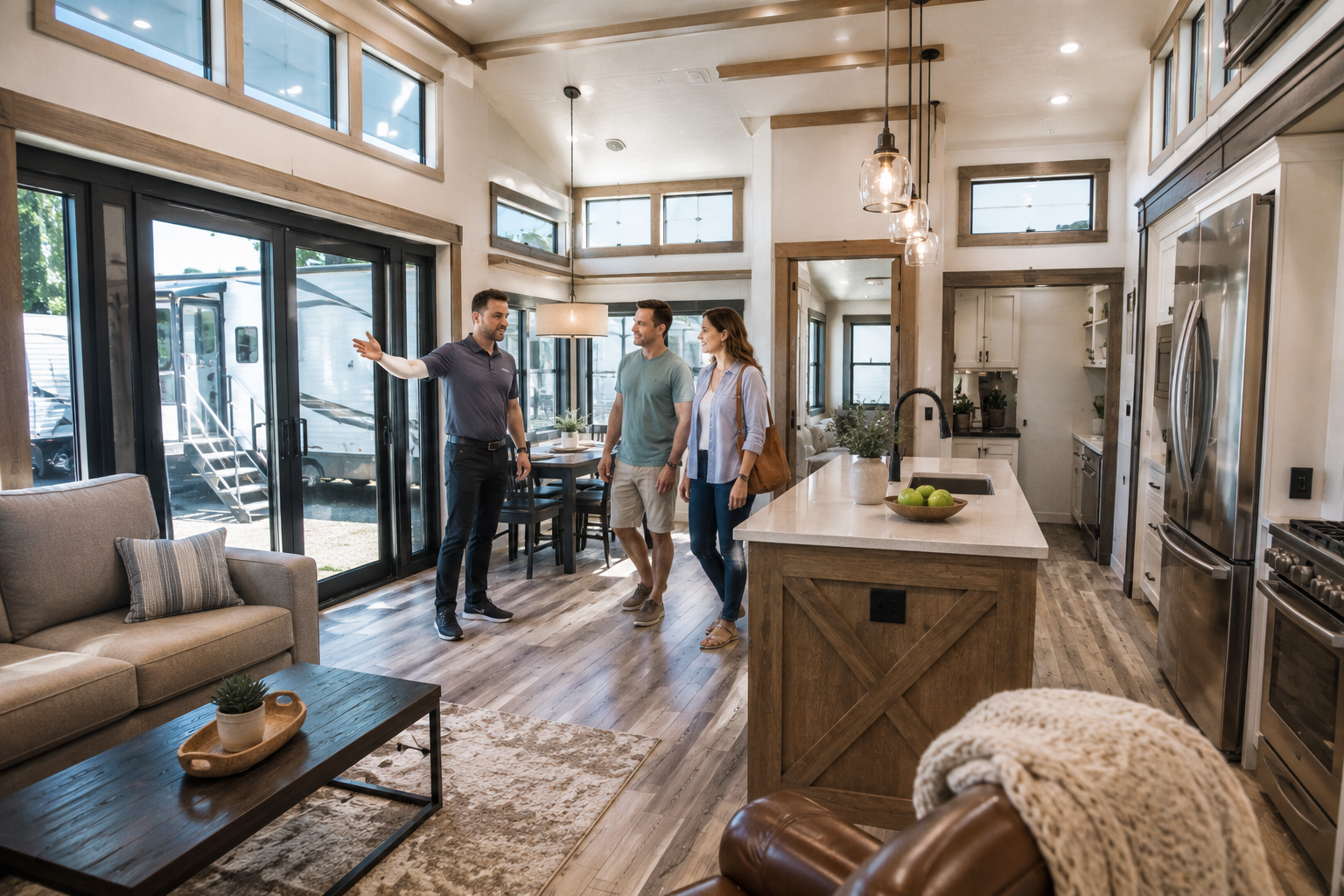
The best approach is to compare several floorplans in person and choose the trailer that fits how you actually plan to camp.
Frequently Asked Questions
What Is the Purpose of a Destination Trailer?
A destination trailer is primarily designed for extended stays at one location. It offers more residential living space than many traditional travel trailers while remaining towable when relocation is necessary.
Can You Tow a Destination Trailer?
Yes, but many are large and heavy. You need an appropriately rated tow vehicle and hitch setup. Some owners use professional delivery because their trailer moves only occasionally.
Can You Live in a Destination Trailer?
Many destination trailers provide features suitable for extended living, but buyers should verify the manufacturer's intended use, warranty conditions, campground rules, and climate requirements for the specific model.
Are Destination Trailers Good for Families?
Yes. Large floorplans, lofts, multiple sleeping areas, big kitchens, and additional storage can make them particularly useful for families spending weeks or months at one campsite.
Are Destination Trailers Good for Traveling?
They are towable, but frequent travel is not their primary strength. Campers moving regularly will usually find a traditional travel trailer or fifth wheel easier to manage.
What Is the Difference Between a Park Model and a Destination Trailer?
A destination trailer remains an RV designed to be towable on its own chassis. Park models generally occupy a different regulatory and construction category and are intended for more permanent placement. Buyers should confirm classifications and campground requirements before purchasing.