
Best Travel Trailers for Boondocking and Dry Camping
Boondocking strips away hookups entirely, which means your travel trailer needs to generate its own power, hold enough water for days at a time, and manage waste without a sewer connection anywhere in sight. Not every trailer is built for that kind of independence, so knowing exactly what separates a boondocking-ready unit from a standard campground trailer matters before you commit to one.
Solar and Battery Capacity Come First
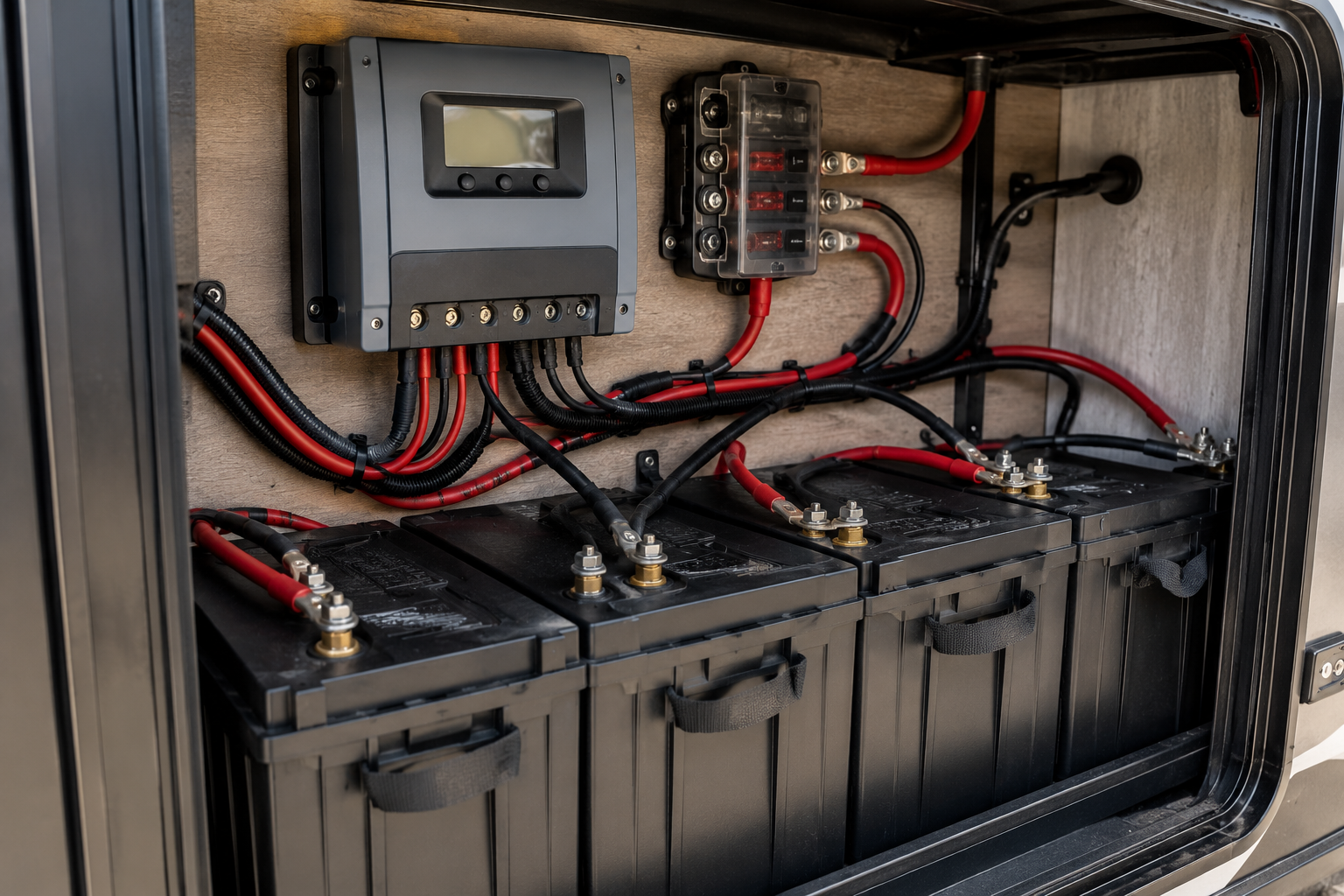
Solar power is the backbone of any serious boondocking setup, since it's what keeps your batteries charged without running a noisy generator for hours every day. Look for trailers with a factory-installed solar system in the 200 to 400-watt range at minimum, ideally paired with an MPPT charge controller rather than a less efficient PWM controller, since MPPT squeezes more usable power out of the same panel size.
Several manufacturers now offer expandable solar setups standard, letting owners start with a smaller panel array and add capacity later without rewiring the entire system. Lithium batteries have become the preferred choice over traditional lead-acid for boondocking specifically, since they handle deeper discharge cycles without damage and recharge faster once the sun comes back out.
Fresh Water and Holding Tank Size Matter More Than You'd Think
Every gallon of fresh water you carry is a gallon you don't have to hike to a spigot for, so larger tanks directly translate into longer stays between resupply trips. Look for fresh water tanks in the 50 to 75-gallon range for genuinely extended boondocking, since anything smaller forces frequent water runs that undercut the whole point of camping off-grid.
Gray and black tank capacity matters just as much, since dry camping means no sewer hookup to drain into whenever you'd like. A trailer with generous holding tank capacity on both sides lets you stretch a multi-day stay without needing to break camp early just to dump tanks.
Energy-Efficient Appliances Reduce Battery Drain
Every appliance running off battery power competes for the same limited solar and battery capacity, so efficiency matters more in a boondocking trailer than in one that's plugged into shore power every night. LED lighting throughout, a residential-style refrigerator on 12-volt or propane rather than one requiring constant AC power, and a tankless or on-demand water heater all reduce the daily energy draw considerably.
Some newer solar-equipped trailers pair multiple air conditioners with enough battery and inverter capacity to run them briefly off-grid, though most serious boondockers still rely primarily on ceiling vents and window coverage rather than AC for day-to-day cooling during extended stays.
Weight and Towability for Remote Access
Boondocking often means driving down forest service roads, gravel paths, or uneven terrain that a paved campground never requires, so a trailer's dry weight and ground clearance both matter more here than for typical developed-campground camping. Lighter trailers in the 6,000 to 10,000 pound dry weight range are generally easier to maneuver into tighter, less-improved sites and put less strain on your tow vehicle over rough terrain.
Fifth wheels with solar packages offer more living space and larger tank capacity for those willing to tow with a heavier truck, while lighter travel trailers appeal more to boondockers prioritizing maneuverability and towing flexibility with a wider range of vehicles.
Construction Details That Matter Off-Grid
A trailer with a fully enclosed and insulated underbelly protects plumbing lines from freezing during shoulder-season boondocking trips in cooler climates, extending your usable camping season beyond just summer. Composite or aluminum-framed construction also tends to hold up better to the vibration and stress of unpaved roads compared to older wood-frame designs, reducing the chance of interior rattling or seal failures developing over repeated off-grid trips.
Real-World Example
A couple planning week-long stays on public land without hookups would do well with a lighter travel trailer carrying an expandable solar setup and at least 50 gallons of fresh water, since that combination balances towability with genuine off-grid independence. A family wanting the same off-grid capability but with more living space might lean toward a solar-equipped fifth wheel instead, accepting the need for a heavier-duty truck in exchange for larger tanks and more room to spread out over a longer stay.
Questions to Ask Before Buying a Boondocking Trailer
What's the total solar wattage installed, and can it be expanded later without a full rewire?
Is the battery bank lithium or lead-acid, and what's the actual usable amp-hour capacity?
What are the fresh water, gray, and black tank sizes, and how many days of typical use do they support?
Does the trailer have an enclosed, insulated underbelly for shoulder-season or cold-weather boondocking?
What's the dry weight and does my current tow vehicle comfortably handle it on rougher terrain?
Getting Started With Solar-Equipped Inventory
Several new travel trailers and fifth wheels currently on the lot come solar-equipped straight from the manufacturer, eliminating the need to retrofit panels and a controller after purchase. Comparing tank sizes, battery type, and solar wattage side by side across a few in-stock models is the fastest way to narrow down which unit actually fits your specific boondocking style, whether that's weekend trips or extended weeks-long stays off the grid.
Boondocking rewards a trailer that was actually built for independence from the start, not one retrofitted after the fact, so prioritizing solar capacity, tank size, and appliance efficiency upfront saves you both money and frustration once you're actually parked somewhere with no hookups in sight.weight,